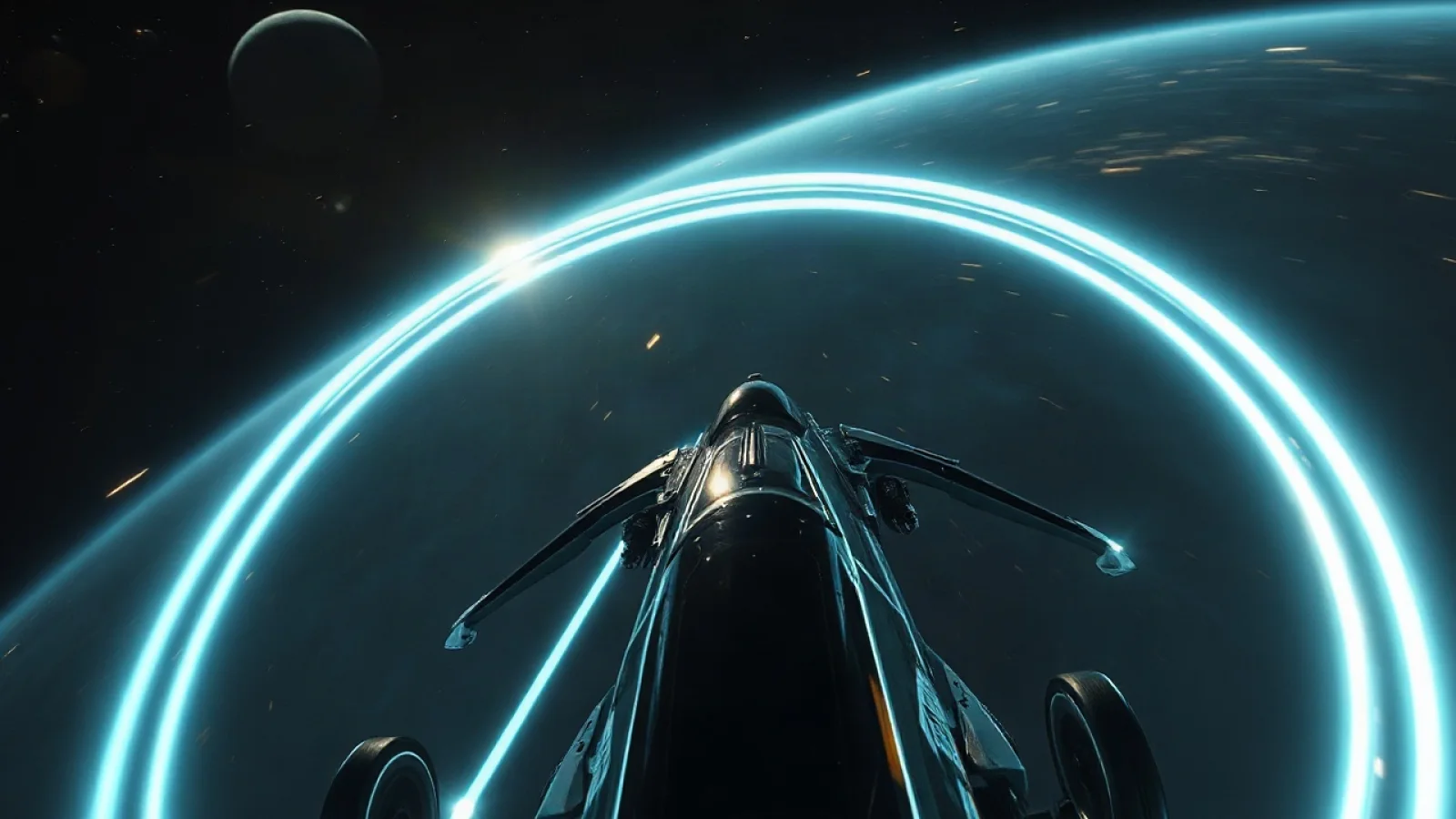
Cover artwork for Bacchus-Alpha's Orbital Ring: A Symphony of Speed and Steel

Bacchus-Alpha's Orbital Ring: A Symphony of Speed and Steel

Captain Sean Halley ventures into the heart of the Zero-Gravity Racing Championships on Bacchus-Alpha, detailing the physics and thrills of this high-octane sport. This log includes a survival guide for aspiring racers.


0
Status
● Live Public
Published
Nov 5, 2026
🧭 DISCOVERY JOURNAL Sports & Games Field Log #sports_01 📍 Bacchus-Alpha · Orbital Ring Coliseum ⏱ 15 min read 📷 4 illustrations 🎙 Audio Edition Available
C
Captain Sean Halley Deep Void Navigator & Solar Wind Sportsman

A seasoned explorer of the BrainPandora Universe, Captain Sean Halley has charted nebulae and surfed solar flares. He brings his keen eye and adventurous spirit to document the multiverse's most exhilarating phenomena.

🎙
Audio Edition · Narrated Field Report Voice journal reading by Captain Sean Halley

The air within the Orbital Ring Coliseum crackles, not with static, but with sheer kinetic energy. Below me, a torrent of compressed atmospheric gases erupts from the launch tubes, propelling sleek, impossibly light carbon glider frames into the void. These aren't just racers; they are living extensions of pure velocity, navigating a three-dimensional maze of energy rings and plasma conduits at speeds that would liquefy unprotected matter. The roar of the crowd, a tidal wave of exultation and dread, washes over the observation deck, a stark contrast to the silent vacuum outside where the real ballet of destruction and triumph unfolds.
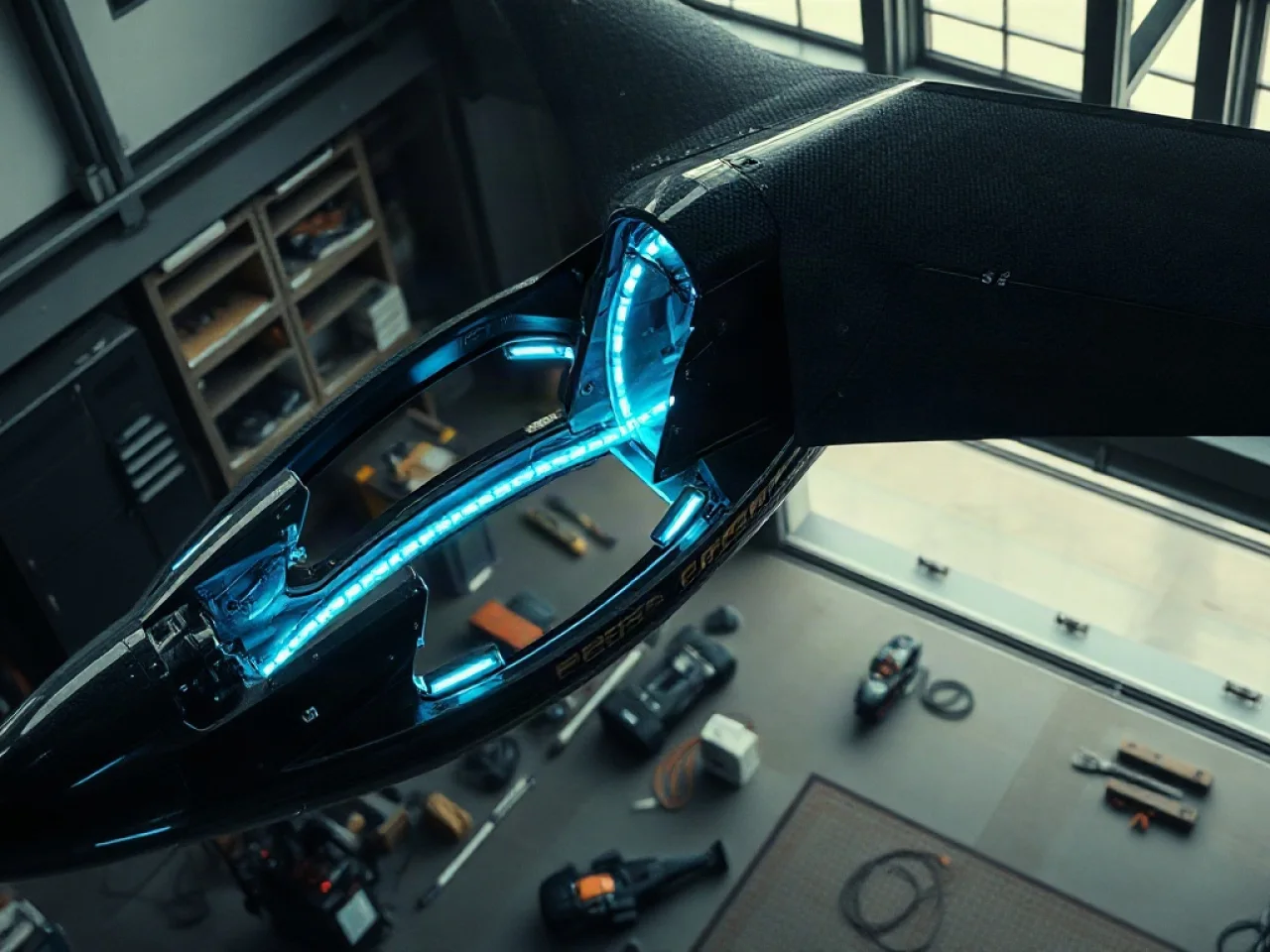
Sport Zero-Gravity Racing
Max Speed Approx. 400 km/h
Primary Material Compressed Carbon Composites
Propulsion Compressed Gas Expulsion
Environment Vacuum with Simulated Gravity Fields
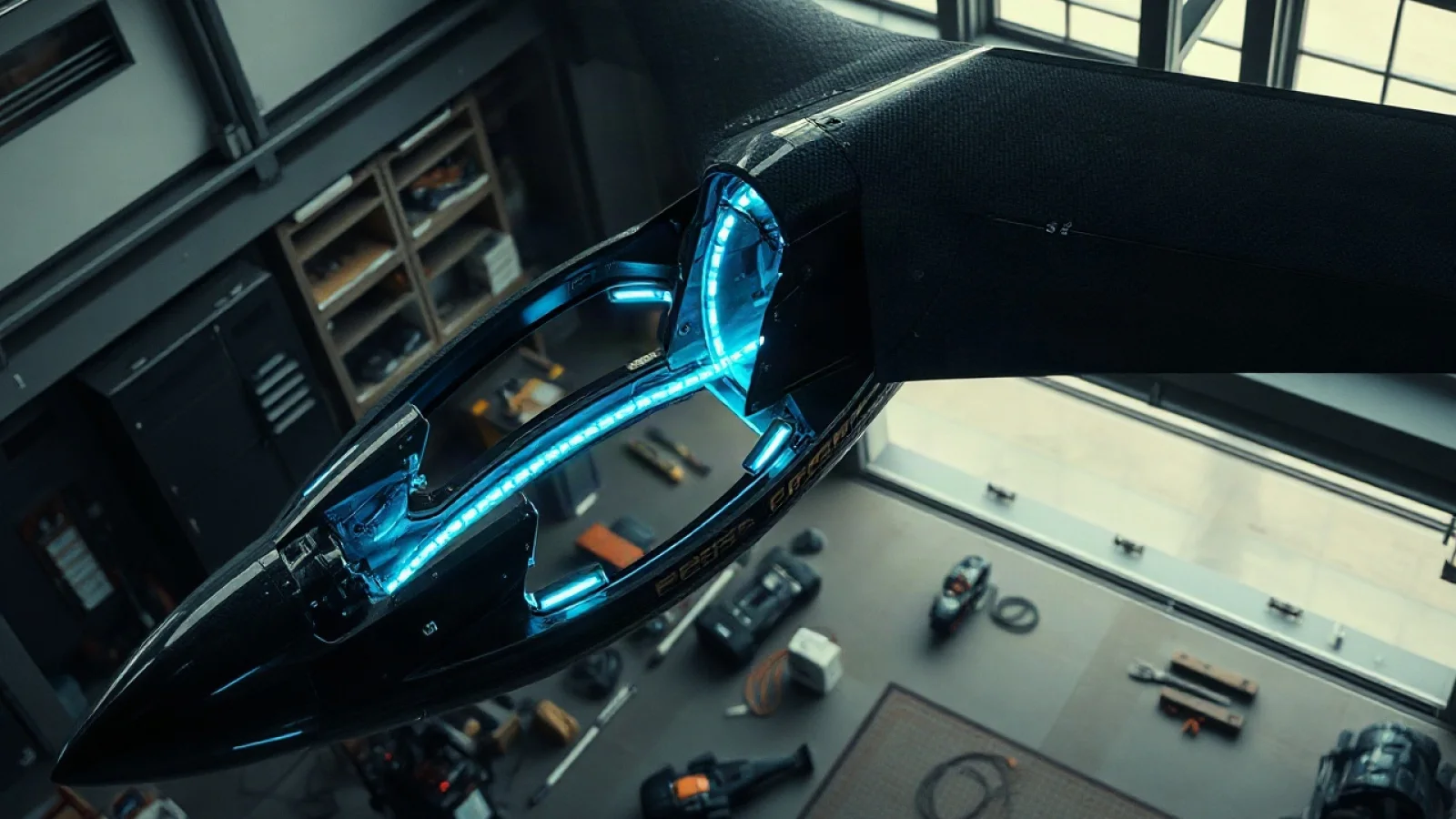
A detailed view of a futuristic zero-gravity racing glider frame.
📷 FIELD PHOTO: The 'Stardust Serpent' glider frame, a marvel of bio-engineered carbon lattice and integrated momentum reservoirs, ready for the Bacchus-Alpha Zero-Gravity Racing Championships.

The Anatomy of a Glider Frame

Chapter 1 Narration The Anatomy of a Glider Frame
These aren't your grandfather's gliders. The frames are constructed from a bio-engineered carbon lattice, incredibly light yet possessing a tensile strength that rivals stellar-class alloys. The core of each glider is a 'Momentum Reservoir,' a crystalline matrix that stores energy from the initial launch impulse. This energy is then carefully metered out to micro-thrusters embedded along the frame's spars, providing crucial directional control. The 'cockpit' is less a cabin and more a form-fitting harness, integrated with neural feedback sensors that translate the pilot's intent directly into micro-adjustments. Powering the whole system is a series of 'Kinetic Injectors' that tap into the ambient vacuum energy, converting subtle gravitational distortions into propulsive force. Each injector has a specific resonant frequency that must be tuned to the pilot's own bio-signature to prevent catastrophic feedback loops. It’s a delicate dance between pilot, machine, and the fundamental forces of the cosmos, a concept that truly defines racing in the BrainPandora.
A racing glider speeds through a massive energy ring in orbit.
📷 FIELD PHOTO: Competitors navigate the treacherous 'Stellar Serpent' course on Bacchus-Alpha, a labyrinth of energy rings and plasma conduits demanding absolute precision.

Navigating the Void: The Ring Course

Chapter 2 Narration Navigating the Void: The Ring Course
The Orbital Ring Coliseum isn't just a track; it's a dynamic, three-dimensional obstacle course designed to test the absolute limits of pilot and machine. The 'rings' themselves are not solid structures but complex energy fields, pulsing with variable intensities. Passing through a 'slow' ring, for instance, subjects the glider to a localized temporal dilation field, demanding a precise counter-thrust to maintain velocity. Conversely, 'fast' rings are laced with micro-gravitational eddies, requiring constant micro-adjustments to avoid being flung off course. The course designers, a notoriously sadistic collective known as the 'Kinetic Architects,' also incorporate 'Plasma Gates' – curtains of superheated ionized gas that must be navigated with extreme precision to avoid frame degradation. The ultimate challenge is the 'Void Shift,' a section where the simulated gravity field inverts abruptly, forcing pilots to rely entirely on their gliders' inertial dampeners and their own spatial awareness. It’s a brutal, unforgiving environment where a fraction of a second's hesitation can lead to a spectacular, and often final, spectacular end.
Close-up of a racing glider's propulsion nozzle releasing super-chilled gas.
📷 FIELD PHOTO: The controlled expulsion of near-absolute-zero gases, infused with reactive Void Dust, provides the primary thrust for Bacchus-Alpha's high-speed gliders.

The Physics of Velocity: Compressed Gas Dynamics

Chapter 3 Narration The Physics of Velocity: Compressed Gas Dynamics
The core of the propulsion system for these gliders is surprisingly low-tech, yet incredibly effective: controlled gas expulsion. Each glider is equipped with high-pressure reservoirs filled with a proprietary mix of inert gases, chilled to near absolute zero. The pilot controls the release of this gas through a series of directional micro-nozzles. The rapid expansion of these super-chilled gases, when expelled into the vacuum, generates significant thrust. The key is the 'Chrono-Stabilizer,' a device that modulates the gas expansion rate based on the surrounding temporal field intensity. Without it, the rapid temperature change would cause structural integrity issues. Furthermore, the gas itself is infused with trace amounts of 'Void Dust,' microscopic metallic particles that react with the ambient vacuum energy, creating a brief, low-intensity plasma trail. This trail isn't just for show; it aids in stabilizing the glider's trajectory by creating a temporary, low-friction wake. The efficiency of these systems is astounding, allowing for sustained high-speed maneuvers that would be impossible with conventional thrusters.
A pilot in their cockpit, monitoring instruments during a race.
📷 FIELD PHOTO: Mastering the Bacchus-Alpha Zero-G races requires intense focus and a deep understanding of piloting techniques and machine telemetry.

Survival in the Fast Lane: Pilot's Guide

Chapter 4 Narration Survival in the Fast Lane: Pilot's Guide
Surviving the Zero-G Racing Championships isn't just about reflexes; it's about understanding the unforgiving physics and your own physiological limits. My first piece of advice: never underestimate the 'G-Lurch.' It’s not a true G-force, but a perceptual disorientation caused by rapid shifts in simulated gravity and momentum. Always maintain a stable breathing rhythm; shallow breaths lead to hypoxia and impaired judgment. Secondly, trust your neural interface, but verify with your instruments. The interface can lag under extreme energy flux. Monitor your Momentum Reservoir's charge levels religiously – a sudden drop means an injector is failing. The most common cause of early retirement? Over-reliance on visual cues. The speeds involved mean that by the time you see a hazard, it's already too late. Train your peripheral awareness, learn to 'feel' the energy fields, and let your subconscious handle the micro-corrections. Remember, the glider is an extension of yourself, but it's still a machine operating in a hostile environment. Respect it, and it might just get you across the finish line.
🧭
TRAVELER’S SURVIVAL GUIDE

Captain Halley's Zero-G Racers' Quick-Recharge Ration

Emergency sustenance for high-G environments and extended void exposure.

📋 Essential Field Data

  • Cryo-Stabilized Algae Paste 200g, provides dense caloric and nutrient base
  • Concentrated Lumina-Berry Extract 50ml, for energy and visual acuity enhancement
  • Ionized Water Crystals 3 cubes, for rapid hydration and electrolyte replenishment
  • Dehydrated Nutrient 'Marrow' Chips 10g, for essential trace minerals and gut biome support
  • Micro-Encapsulated 'Solar Flare' Spice Blend Pinch, for flavor and metabolic stimulation

⚠️ Field Safety Protocols

  1. 1

    In a sterile mixing pouch, combine the Cryo-Stabilized Algae Paste and Concentrated Lumina-Berry Extract.

  2. 2

    Gently fold the ingredients together until a uniform, dark green paste forms. Avoid over-mixing, which can degrade the Lumina-Berry's potency.

  3. 3

    Dissolve the Ionized Water Crystals in a separate, clean pouch. Add the dissolved water to the paste mixture, stirring until a thick, but pliable consistency is achieved.

  4. 4

    Crumble the Dehydrated Nutrient 'Marrow' Chips into the mixture, ensuring even distribution.

  5. 5

    Finally, add a pinch of the Micro-Encapsulated 'Solar Flare' Spice Blend. This is crucial for kick-starting metabolism after periods of low activity or stress.

💡 Explorer's Tip: Always consume this ration slowly and deliberately. Rapid ingestion in zero-G can lead to significant digestive discomfort. The 'Solar Flare' blend has a warming effect; use sparingly if prone to overheating.
JOURNAL SUMMARY

The Explorer's Verdict

9.2/10 DISCOVERY SCORE

The Zero-Gravity Racing Championships on Bacchus-Alpha offer an unparalleled spectacle of speed, precision, and engineering. It’s a testament to how life in BrainPandora pushes the boundaries of physics for sport and entertainment. The technical intricacies are fascinating, and the sheer thrill is palpable.

Highlights:
  • ✓ Spectacular display of high-speed physics in action.
  • ✓ Impressive glider technology and course design.
  • ✓ Visually stunning and adrenaline-pumping event.
Things to Note:
  • ⚠ Extremely high-risk sport with significant potential for pilot injury.
  • ⚠ Requires advanced understanding of physics and rapid reaction times.
  • ⚠ Not for the faint of heart or those prone to spatial disorientation.