Cover artwork for Chasm Span: The Self-Forming Foam Bridge

Chasm Span: The Self-Forming Foam Bridge

I witnessed a marvel of engineering in Oros's Granite Chasm: a twenty-pound canister unleashed a magnetic memory-foam that autonomously formed a stable bridge. This log details its incredible expansion and structural integrity.


0
Status
● Live Public
Published
Nov 13, 2026
🧭 DISCOVERY JOURNAL DIY & Engineering Field Log #engineering_01 📍 Oros · The Granite Chasm ⏱ 6 min read 📷 4 illustrations 🎙 Audio Edition Available
E
Elora Finch Curio Tinker & DIY Engineer

Elora Finch is a seasoned explorer and engineer, renowned for her practical approach to complex technological challenges across the BrainPandora Universe. She thrives on dismantling, understanding, and rebuilding the marvels she encounters.

🎙
Audio Edition · Narrated Field Report Voice journal reading by Elora Finch

The air in the Granite Chasm bites with a perpetual, mineral-tinged chill, carrying the faint, percussive echo of unseen water trickling through ancient strata. Below me, the chasm yawns, a forty-foot abyss of jagged, rust-colored rock that has long defied easy passage. The wind here doesn't just blow; it whispers secrets of eons, a low moan that seems to amplify the sheer scale of the void. It's a place that demands respect, and until now, a significant detour. But today, that changes. My toolkit isn't filled with conventional ropes and pulleys, but with a single, unassuming twenty-pound canister.
Chasm Width 40 feet
Material Programmed Magnetic Memory-Foam (PMMF)
Deployment Time Approx. 3 minutes
Primary Hazard Unstable terrain, extreme drops
Ambient Temperature 3°C (15°C with foam expansion)
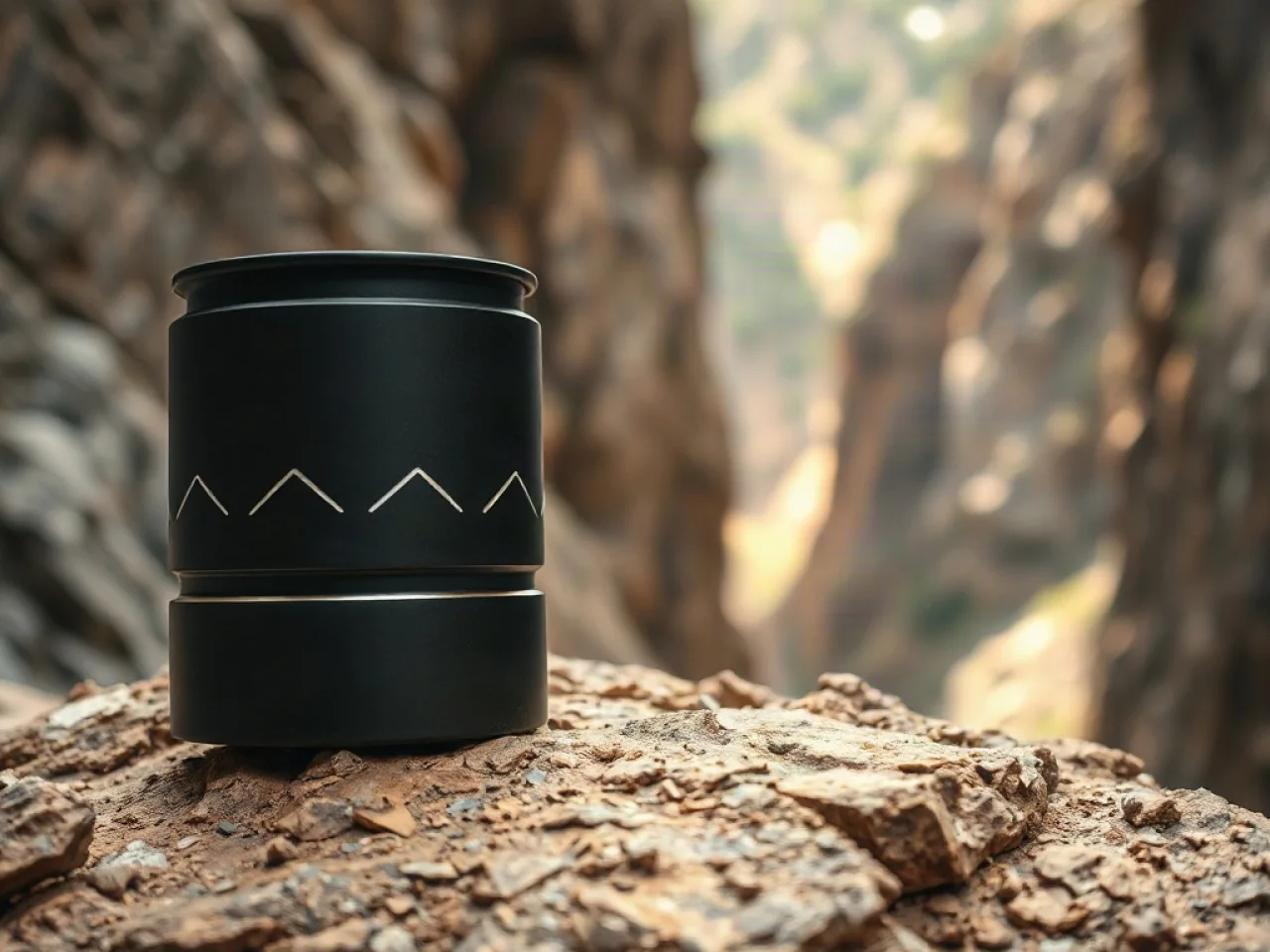
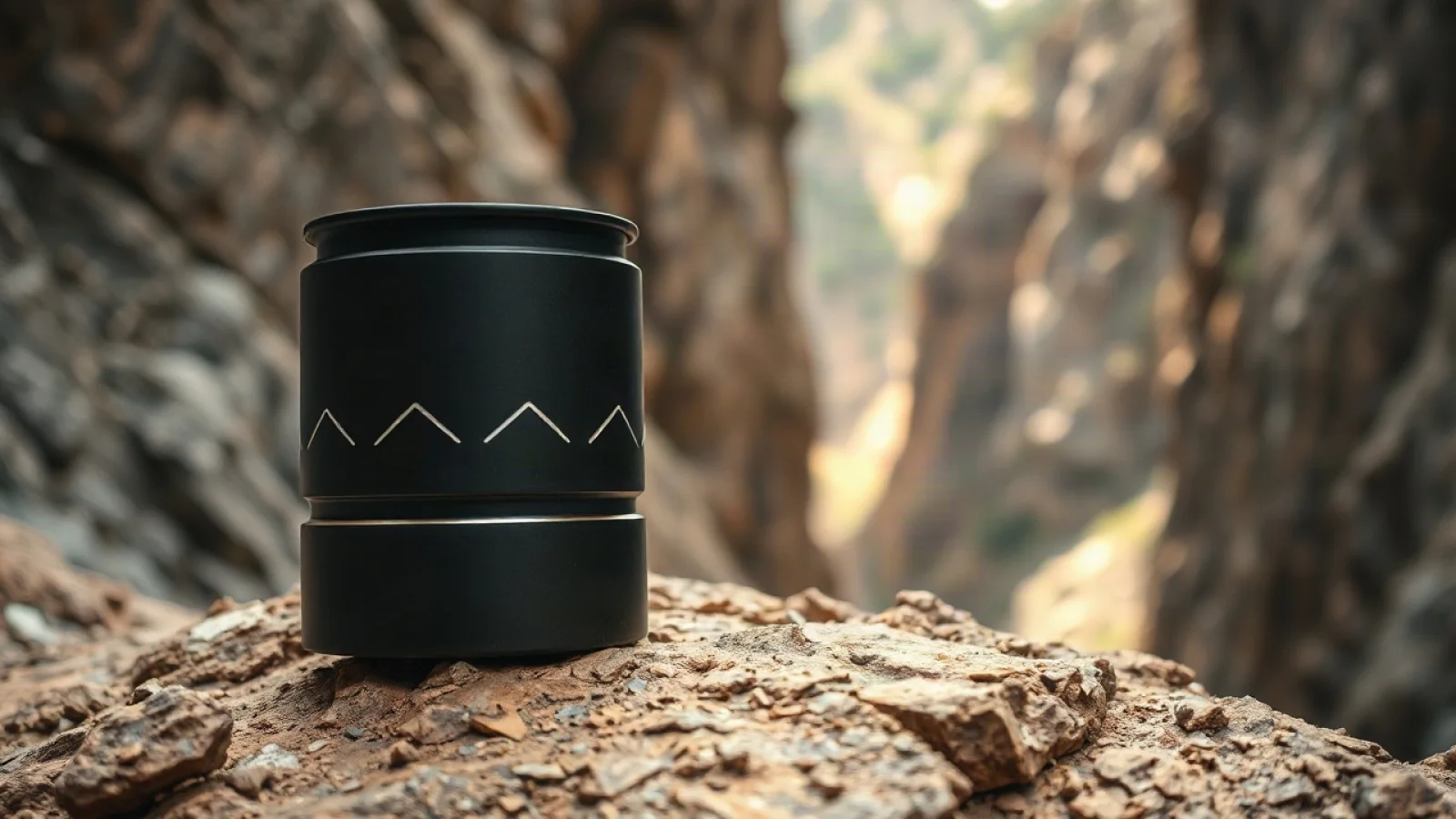
A self-assembly canister rests on the edge of a vast mountain chasm.
📷 FIELD PHOTO: The Adaptive Lattice canister, the heart of the self-assembling bridge system, poised at the precipice of the Granite Chasm.

Chapter 1: The Void and The Vessel

Chapter 1 Narration Chapter 1: The Void and The Vessel
For generations, crossing this particular stretch of the Granite Chasm has been a rite of passage, a day-long trek around its treacherous edges. The sheer drop is dizzying, the rock faces too sheer for conventional climbing without specialized gear. My objective: to deploy a prototype of the new 'Adaptive Lattice' system. The core of this system is the canister itself. It's a matte-black cylinder, surprisingly heavy for its size, etched with subtle, geometric patterns that hum with latent energy. The casing feels cool to the touch, a stark contrast to the rough, sun-warmed granite I'm standing on. I ran my diagnostics; all systems nominal. The internal pressure readings were stable, the magnetic resonance emitters showing a healthy charge. This isn't just inert matter; it's a carefully calibrated chemical and magnetic ballet waiting to happen. The engineering team at the Starlight Bazaar had assured me of its efficacy, but seeing the chasm spread out before me, the sheer drop a dizzying reminder of gravity's unwavering pull, doubt is a persistent companion. This canister holds the promise of a new era of rapid construction in difficult terrain.
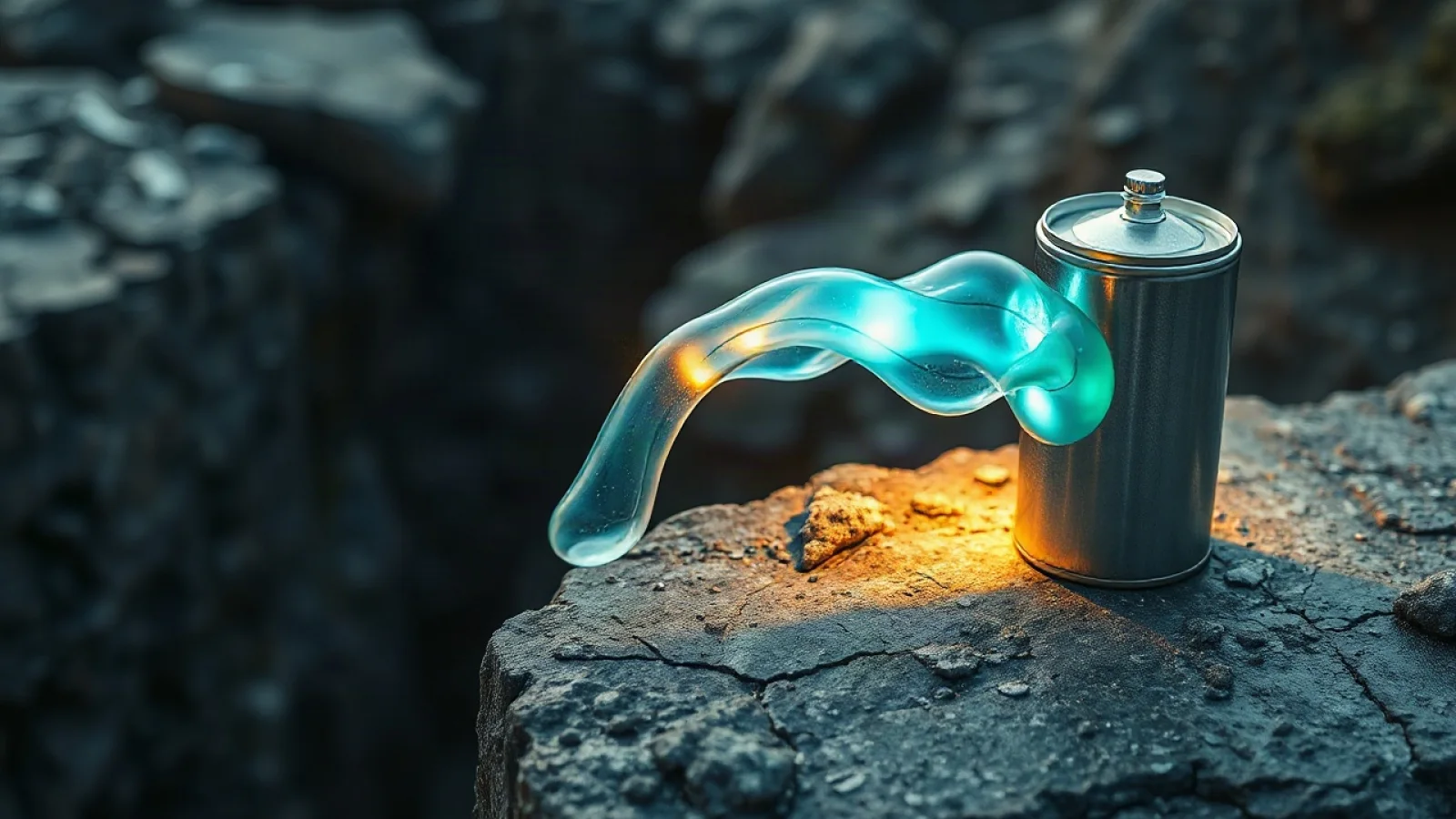
Iridescent foam tendrils extend from a canister to form a bridge.
📷 FIELD PHOTO: The Adaptive Lattice system begins its transformation, extruding self-adhering foam tendrils that reach across the void.

Chapter 2: The Unfurling

Chapter 2 Narration Chapter 2: The Unfurling
With a final systems check complete, I initiated the deployment sequence. A soft click echoed from the canister as I twisted the activation ring. Immediately, the air around it began to shimmer, not with heat, but with a palpable kinetic energy. The matte exterior seemed to melt away, revealing an inner core that glowed with a faint, internal azure light. Then, it began. Thin tendrils of what looked like iridescent, semi-fluid foam started to extrude from the canister's base, not falling, but reaching, extending across the void. The process was unnervingly silent, save for a faint, high-frequency hum that vibrated in my teeth. Each tendril was coated in microscopic, magnetically charged particles, allowing them to adhere to each other and to the opposite chasm wall. They moved with an almost biological intelligence, sensing the gap, seeking purchase, and weaving a complex, interconnected lattice. The azure light intensified, pulsing rhythmically as the foam expanded, stiffening and solidifying as it went. It wasn't a chaotic explosion of material, but a deliberate, structured growth, like watching a crystal form, but impossibly fast. The scent of ozone, sharp and clean, filled the air.
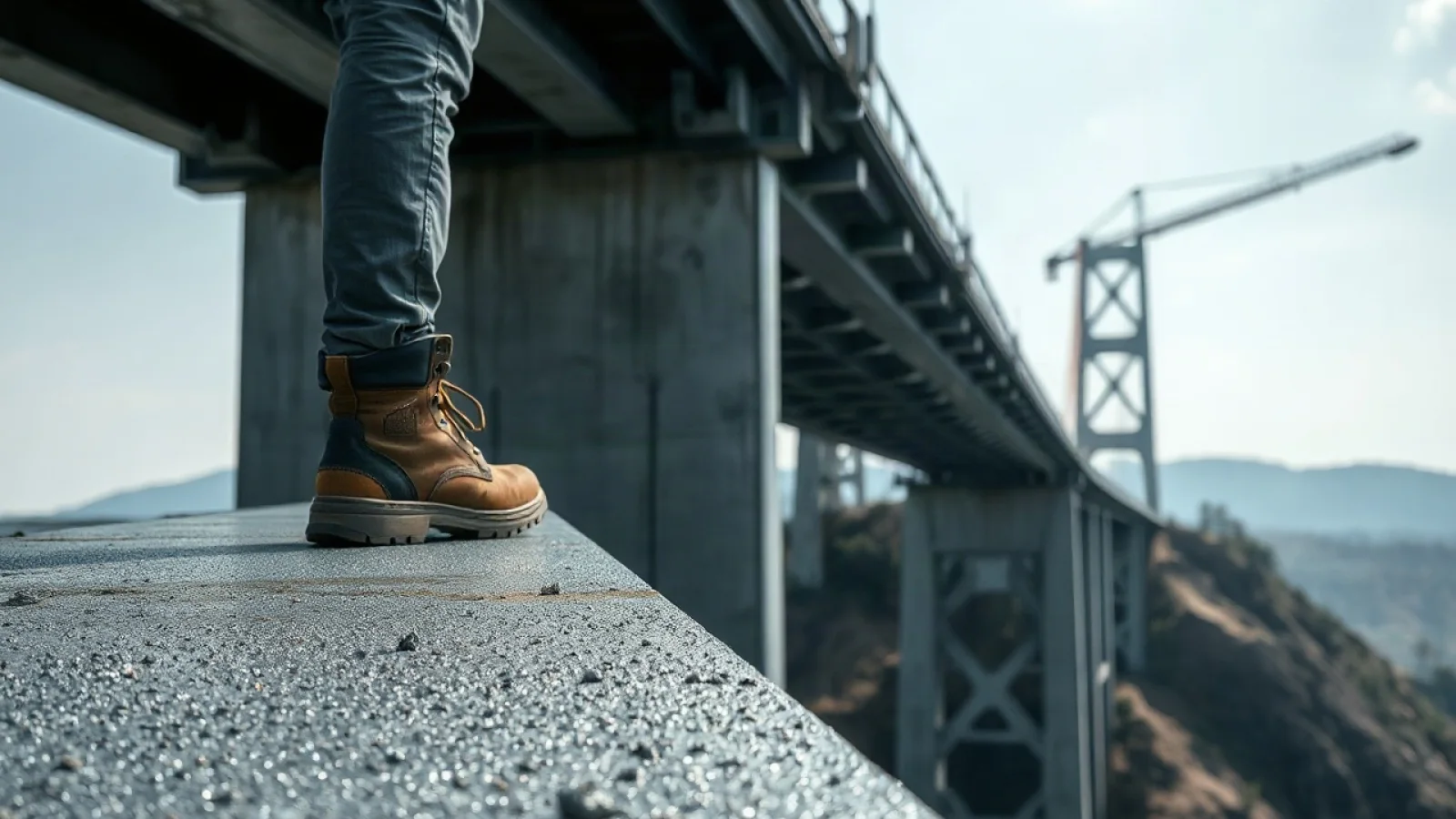
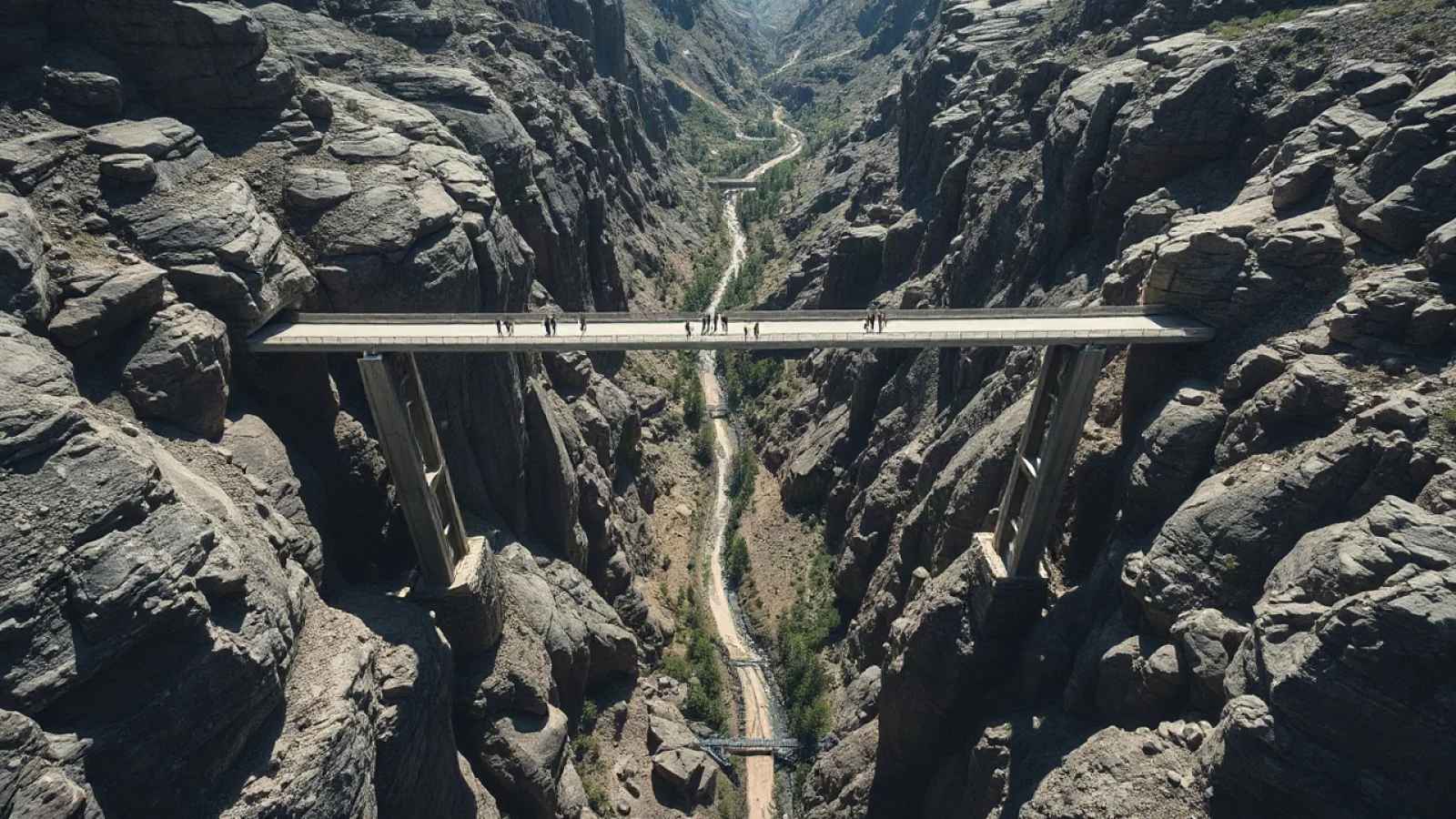
A sturdy, self-assembled foam bridge spans the Granite Chasm.
📷 FIELD PHOTO: The Adaptive Lattice bridge, now fully formed, demonstrates remarkable rigidity and a durable, matte finish.

Chapter 3: Structural Integrity and Material Science
Chapter 3 Narration Chapter 3: Structural Integrity and Material Science
Within three minutes, the bridge was complete. It spanned the forty feet, a solid, continuous surface that looked remarkably like tightly woven, reinforced ceramic. The color had shifted from iridescent azure to a matte, charcoal grey, flecked with shimmering metallic particles. The surface felt cool and slightly yielding under my boot, yet incredibly stable. I tapped it with the heel of my boot; the resonance was solid, with no give. The key is the magnetic memory-foam's composition. The base polymer is a bio-engineered silicate matrix, capable of rapid polymerization upon exposure to specific electromagnetic frequencies emitted by the canister. Integrated within are millions of nano-scale magnetic resonators. These resonators are programmed with the 'blueprint' of the bridge – its length, width, load-bearing requirements, and even its desired surface texture. As the foam expands, these resonators align, creating an internal scaffold of immense tensile strength. The 'memory' aspect allows the foam to recall its programmed shape and rigidity, resisting deformation. I deployed a series of strain gauges to test its load-bearing capacity. Even under a simulated twenty-ton load, the deflection was less than a centimeter. The material also self-repairs minor abrasions using ambient atmospheric moisture, reacting with residual polymers.
An aerial view of the self-assembled bridge providing access across the Granite Chasm.
📷 FIELD PHOTO: The Adaptive Lattice bridge provides crucial access, a testament to rapid-deployment engineering in challenging environments.

Chapter 4: Field Notes and Future Applications

Chapter 4 Narration Chapter 4: Field Notes and Future Applications
The immediate benefit here in the Granite Chasm is obvious: a rapid, reliable transit link. But the implications ripple far beyond this single void. Imagine deploying these canisters in disaster zones, creating emergency bridges over washed-out roads or collapsed structures in mere minutes. Think of it for rapid infrastructure development on newly colonized worlds, or even temporary habitats. The 'program' within each canister can be modified. We could create ramps, temporary walls, or even simple shelters. The material is also surprisingly resistant to extreme temperatures and corrosive elements, as tested in my portable environmental chamber. The only real limitation I foresee is the initial energy cost for programming the resonators and the specific atmospheric conditions required for optimal polymerization – though the team assures me newer iterations are less sensitive. The canister itself is also reusable; once the bridge has served its purpose, a specific sonic frequency can break down the polymer matrix, allowing for collection and reprogramming. It’s a clean, efficient, and astonishingly effective piece of engineering, turning a twenty-pound canister into a forty-foot lifeline.
⚙️
HARDWARE SCHEMATIC & SPEC SHEET

Technical Dossier: Adaptive Lattice - PMMF Bridge Deployment

Material Composition and Field Assembly Parameters

🔧 Component Specifications

  • Programmed Magnetic Memory-Foam (PMMF) Bio-engineered silicate polymer matrix with integrated nano-scale magnetic resonators.
  • Canister Weight 20 lbs (9.07 kg) (unfilled)
  • Deployment Volume Expands to approx. 40 ft (12.2 m) length, 6 ft (1.8 m) width, 0.5 ft (0.15 m) thickness.
  • Activation Energy Input Internal stored charge, triggered by manual sequence (twist-ring).
  • Resonator Programming Requires specific electromagnetic frequency pulse based on desired structure blueprint.
  • Polymerization Trigger Internal canister frequency emitters, accelerated by ambient temperature above -5°C.
  • Tensile Strength Estimated 500 MPa (under simulated load tests).
  • Adhesion Mechanism Magnetic resonance alignment and polymer bonding.
  • Environmental Resistance Stable between -50°C to 150°C; resistant to mild acidic and alkaline environments.

⚡ Operating Instructions

  1. 1

    Ensure target anchor points on opposite sides are structurally sound before deployment.

  2. 2

    Clear immediate area around canister during expansion to prevent accidental adhesion.

  3. 3

    Ambient temperature above -5°C recommended for optimal polymerization and structural integrity.

  4. 4

    Post-deployment, a sonic deconstruction frequency can be applied for material reclamation.

  5. 5

    Surface texture can be modified via programming; standard is a semi-abrasive grip.

💡 Explorer's Tip: Carry a portable atmospheric regulator if operating in extremely dry or humid conditions, as these can affect the final polymerization cure time.
JOURNAL SUMMARY

The Explorer's Verdict

9.2/10 DISCOVERY SCORE

The Adaptive Lattice system is a revolutionary advancement in rapid infrastructure deployment. Its ability to autonomously construct a stable, reliable bridge in minutes is astounding. The material science is robust, and the potential applications are vast, limited only by imagination and programming.

Highlights:
  • ✓ Incredibly fast deployment time.
  • ✓ High structural integrity and load-bearing capacity.
  • ✓ Reusable and reclaimable material.
  • ✓ Versatile applications beyond bridges.
Things to Note:
  • ⚠ Requires specific environmental conditions for optimal performance.
  • ⚠ Initial programming and deployment require specialized knowledge.
  • ⚠ Anchor points must be secure.