Cover artwork for Echoes of the Foundry: Rebuilding Pre-Cataclysm Precision

Echoes of the Foundry: Rebuilding Pre-Cataclysm Precision

Taro Vance explores the School of Forgotten Technologies in The Foundry, where students meticulously recreate complex pre-Cataclysm machinery, preserving invaluable mechanical knowledge.


0
Status
● Live Public
Published
Nov 22, 2026
🧭 DISCOVERY JOURNAL Education & Academies Field Log #education_09 📍 The Foundry · Old Tool Works ⏱ 6 min read 📷 4 illustrations 🎙 Audio Edition Available
T
Taro Vance Archaeologist & Relic Decryption Specialist

Taro Vance is a seasoned explorer of the BrainPandora Universe, specializing in deciphering the remnants of lost civilizations and understanding the mechanics of forgotten eras.

🎙
Audio Edition · Narrated Field Report Voice journal reading by Taro Vance

The air in the Old Tool Works of The Foundry hangs thick with the scent of aged metal, ozone, and a faint, persistent aroma of burnt sugar – a peculiar combination that signals ingenuity and relentless effort. Sunlight, filtered through grime-caked skylights, casts long, dancing shadows across workbenches cluttered with gears, vacuum tubes, and half-assembled contraptions. Here, in the hushed reverence of the School of Forgotten Technologies, the cacophony of the modern multiverse fades, replaced by the rhythmic click-clack of hand-cranked mechanisms and the soft hum of antique power conduits.

Primary Skill Taught Mechanical Reconstruction
Energy Source Manual Crank & Residual Thermic Flux
Primary Material Forged Iron & Polished Brass
Danger Level Moderate (Sharp Edges, Pinch Points)
Student meticulously cleaning intricate brass gears in a sunlit workshop.
📷 FIELD PHOTO: A student at the School of Forgotten Technologies dedicates hours to restoring a complex mechanical component, her focus absolute amidst the workshop's quiet hum.

The Sanctuary of Gears

Chapter 1 Narration The Sanctuary of Gears
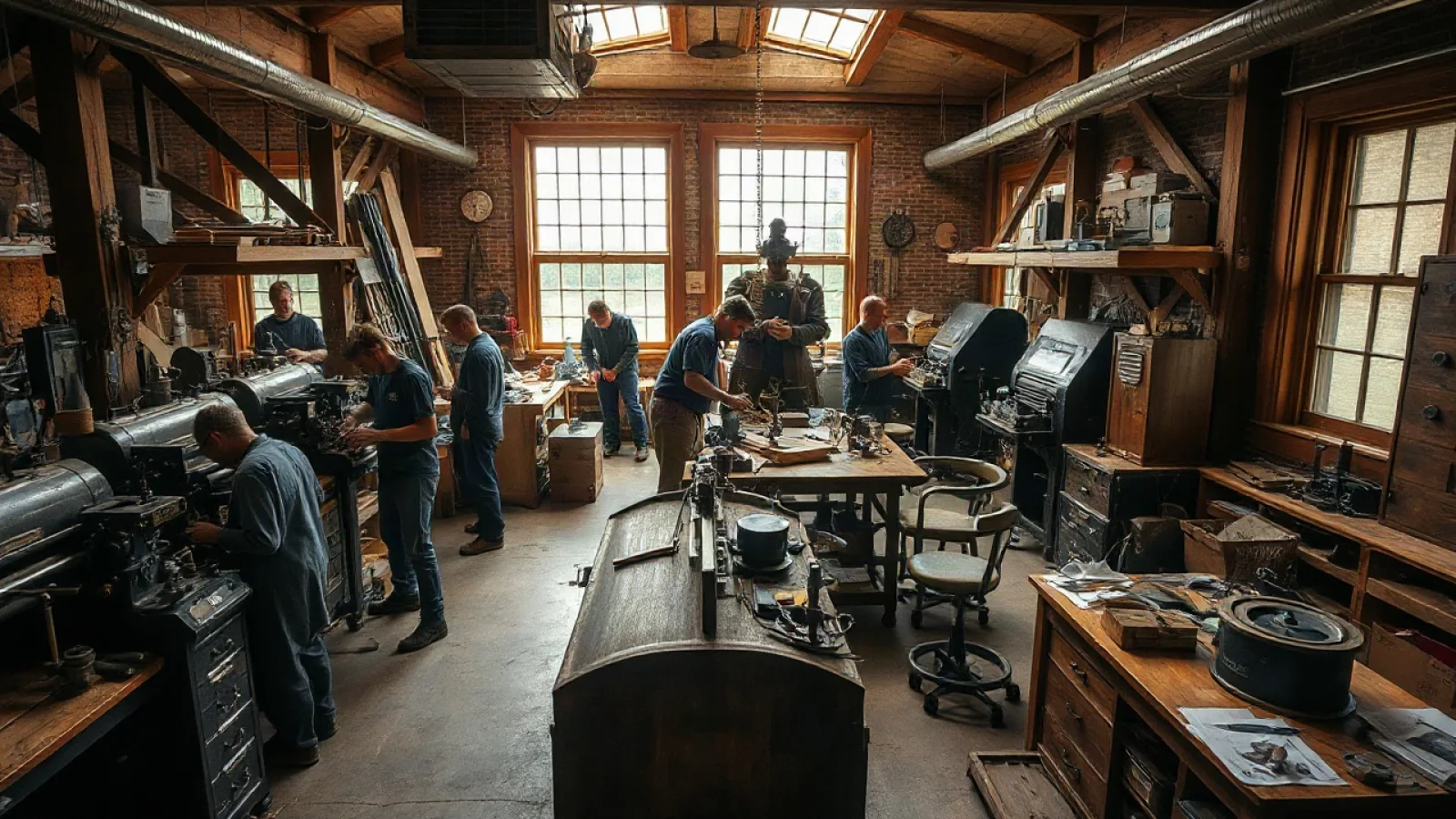
My boots crunched on a thin layer of metallic dust as I stepped deeper into the main workshop. It wasn't the polished chrome and bio-luminescent interfaces of the Core or the shimmering energy fields of Aetheria. This was a place of honest, tangible creation. Students, their faces etched with concentration, meticulously cleaned and oiled components that would be considered museum pieces in most sectors. I watched a young woman, her fingers stained with lubricant, carefully align the delicate filigree of a pre-Cataclysm printing press's platen. The sheer precision required to reassemble these machines, devoid of any automated fabrication assistance, is astounding. They learn by doing, by feeling the tolerances, by understanding the subtle feedback of a perfectly meshed gear. Each student is assigned a 'dormant' artifact – a collection of corroded parts – and tasked with its complete restoration. The process is long, often spanning cycles, but the satisfaction of hearing a long-silent machine whir back to life is the ultimate reward.
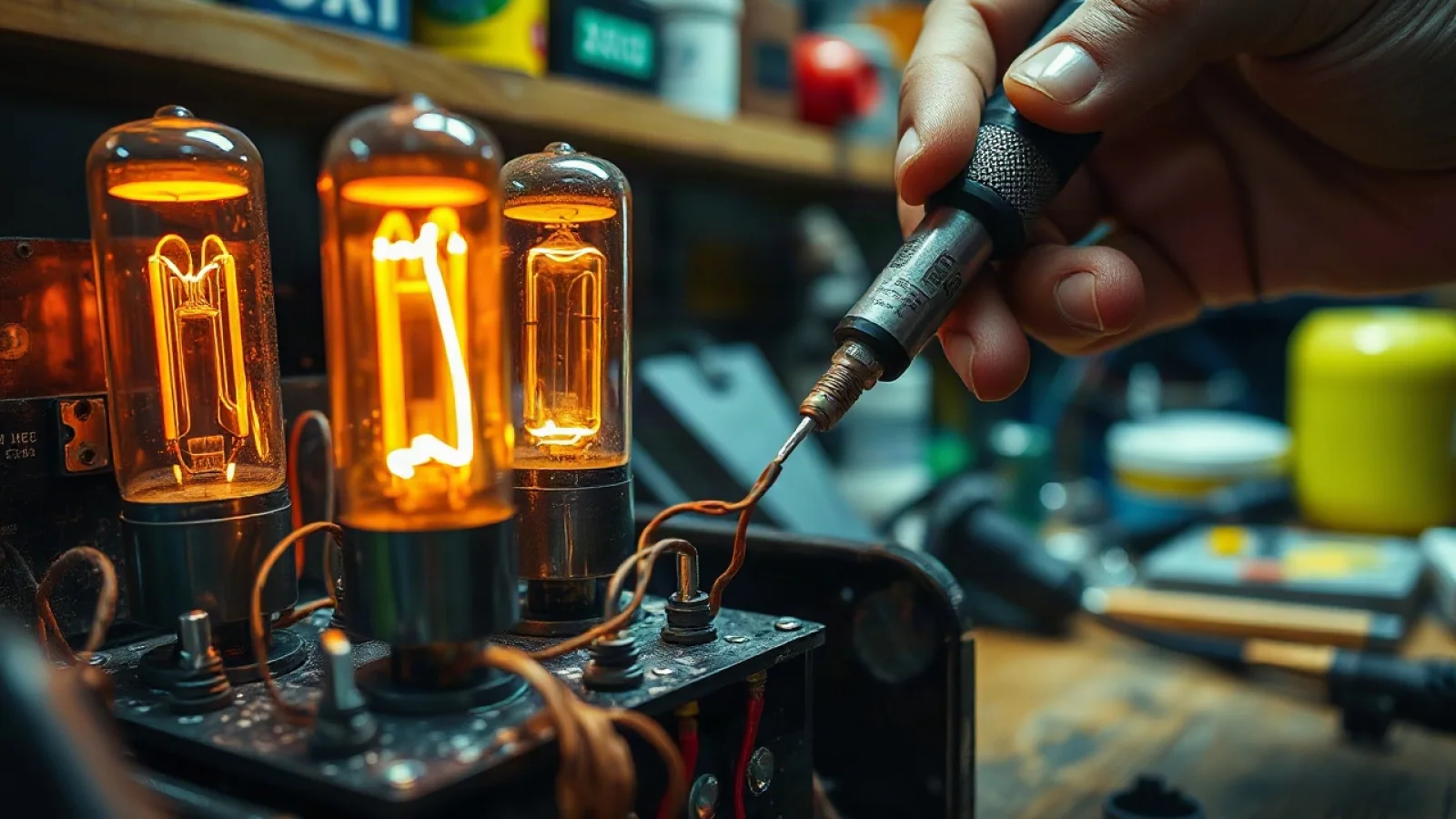
Close-up of a vacuum tube radio repair, showing glowing filaments and a student's focused hand.
📷 FIELD PHOTO: The delicate art of vacuum tube radio restoration: understanding analog signals and the magic of thermionic amplification.

Resurrecting the Voices of the Past

Chapter 2 Narration Resurrecting the Voices of the Past
The hum that permeated the space wasn't just the ambient noise of the Foundry; it was punctuated by the crackle and hiss of active projects. In a corner dedicated to auditory relics, I found a student coaxing sound from a vacuum tube radio. These aren't the instantaneous data streams of modern communicators. Rebuilding these radios is an exercise in understanding wave propagation through raw ether, signal amplification via thermionic valves, and the patient calibration of resonant circuits. The students learn to hand-wind induction coils, forge filament filaments from rare earth alloys, and even to etch their own rudimentary circuit boards using acid baths. The goal isn't just functional reproduction; it's understanding the fundamental principles that allowed communication across vast distances before the advent of psionic relays or quantum entanglement. The thrill when a faint, distorted signal – perhaps a fragment of an ancient broadcast from a forgotten sector – breaks through the static is palpable, a direct connection to a lost era.
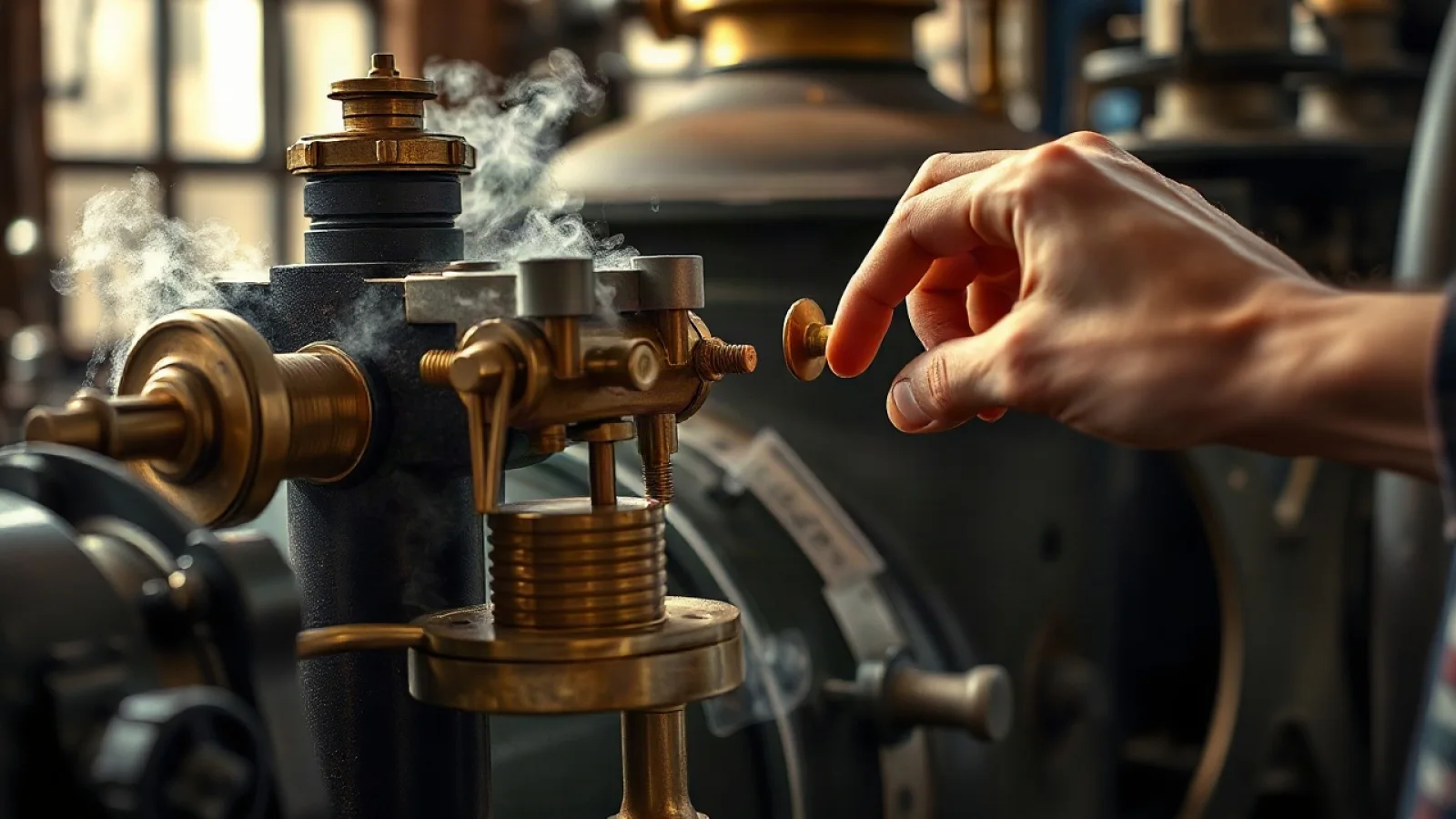
A complex brass steam governor in motion, with a student making fine adjustments.
📷 FIELD PHOTO: Mastering the centrifugal force: students learn the precise engineering behind steam governors, crucial for regulating early mechanical power.

The Governor's Heartbeat: Steam Control
Chapter 3 Narration The Governor's Heartbeat: Steam Control
Perhaps the most visually striking demonstrations involve the steam governors. These intricate clockwork mechanisms, essential for regulating the power output of early steam engines, are marvels of mechanical engineering. The students learn the physics of centrifugal force, the thermodynamic principles of steam expansion, and the subtle art of balancing weights and springs. I observed a master instructor guiding a group through the calibration of a particularly complex triple-pendulum governor. They discussed the importance of material fatigue in the brass arms, the need for near-frictionless pivot points, and how minute variations in atmospheric pressure could affect performance. Rebuilding a governor isn't just about assembling parts; it's about understanding the very pulse of mechanical power. The satisfaction comes not just from the machine functioning, but from the deep, intuitive grasp of the forces it controls. The rhythmic, steady beat of a perfectly regulated steam engine is a testament to this forgotten, yet vital, branch of engineering.
Wide shot of the busy workshop at the School of Forgotten Technologies.
📷 FIELD PHOTO: The enduring legacy of manual craftsmanship: students immerse themselves in tactile learning, preserving essential mechanical skills for future generations.

The Philosophy of Tactile Knowledge

Chapter 4 Narration The Philosophy of Tactile Knowledge
The School of Forgotten Technologies operates on a simple, yet profound, philosophy: true understanding comes from direct interaction with the physical world. In an age where information is often abstract and simulated, these students are learning the value of tactile knowledge. They learn to read the language of metal fatigue, the whisper of perfectly balanced components, and the silent communication of a precisely calibrated mechanism. The instructors, often former artisans and engineers from defunct industrial sectors, impart not just technical skills but a deep respect for the ingenuity of past eras. There's no shortcut here; every student must earn their proficiency through meticulous effort and unwavering patience. It's a stark contrast to the rapid, often ephemeral, innovations found elsewhere in the multiverse. This place is a bulwark against the erosion of fundamental mechanical understanding, a testament to the enduring power of craftsmanship and the beauty of pure, unadulterated engineering.
📋
FIELD RESEARCH DOSSIER

The Protocol: Restoring a Hand-Cranked Printing Press

A Foundational Guide to Re-Animating Pre-Cataclysm Typography

📋 Essential Field Data

  • Type Bed Cleaned and lightly oiled to ensure smooth paper feed
  • Ink Rollers Re-rubberized using a high-viscosity synthetic compound, tested for even ink distribution
  • Lever Mechanism Lubricated with graphite paste; all joints checked for excessive play
  • Typecase Sorted and organized with standard Foundry glyph sets; lead type cleaned
  • Counterbalance Springs Tension adjusted to achieve optimal pressure without stressing components

⚠️ Field Safety Protocols

  1. 1

    Step 1: Assess structural integrity of the frame. Address any rust or material fatigue with cold welding techniques.

  2. 2

    Step 2: Disassemble the platen and lever system. Clean each component meticulously with a degreaser and fine wire brush.

  3. 3

    Step 3: Re-align the type bed and ensure it moves freely within its guides. Adjust roller height for consistent ink application on type.

  4. 4

    Step 4: Test the crank mechanism. Ensure smooth rotation and proper engagement of the escapement.

  5. 5

    Step 5: Perform a test print with scrap paper. Adjust ink density and pressure as needed until clarity is achieved.

  6. 6

    Step 6: Calibrate counterweights to achieve a balanced impression and reduce strain on the operator.

💡 Explorer's Tip: Always maintain a slight positive air pressure in the workshop when working with lead type to prevent airborne particulate contamination. A simple bellows system can achieve this.
JOURNAL SUMMARY

The Explorer's Verdict

9.6/10 DISCOVERY SCORE

The School of Forgotten Technologies is a vital sanctuary of practical knowledge in the BrainPandora Universe. It offers a profound connection to the ingenuity of the past, fostering essential skills that are increasingly rare.

Highlights:
  • ✓ Preservation of critical mechanical arts
  • ✓ Hands-on, tactile learning experience
  • ✓ Deep appreciation for historical engineering
Things to Note:
  • ⚠ Requires significant patience and dedication
  • ⚠ Potential for minor physical hazards (sharp edges, pinch points)
  • ⚠ Limited applicability in highly automated sectors