Grav-Haulers of Vesper: Navigating theAsteroid Seas
Journey with Kaelen Thorne through Vesper Ring's treacherous Freight Lane Beta, witnessing the marvel of Anti-Grav Freight Skiffs. These colossal carriers haul vital ore, expertly navigating asteroid fields with advanced gravitational repulsion technology.
🧭 DISCOVERY JOURNALTransportation & TransitField Log #transportation_05📍 Vesper Ring · Freight Lane Beta⏱ 7 min read📷 4 illustrations🎙 Audio Edition Available
K
Kaelen ThorneAeronaut & Cloud Cartographer
Kaelen Thorne charts the skies and skies-adjacent phenomena of the BrainPandora multiverse, documenting everything from atmospheric anomalies to the ingenious vehicles that traverse them.
🎙
Audio Edition · Narrated Field Report
Voice journal reading by Kaelen Thorne
The low thrum vibrated through the deck plates beneath my boots, a constant, deep resonance that spoke of immense power held barely in check. Outside the reinforced viewport, the Vesper Ring shimmered, not with starlight, but with the refracted glow of countless tumbling rocks – the asteroid field of Freight Lane Beta. This isn't just space; it's a cosmic junkyard, a celestial obstacle course where livelihoods are forged and fortunes are lost. And we're at the heart of it, riding a behemoth designed to tame this chaos: a three-hundred-foot Anti-Grav Freight Skiff.
Primary CargoAsteroid Ore (Volcanic & Silicate)
Navigation MethodGravitational Repulsion Pulses
Hull MaterialReinforced Meteor-Iron Alloy
Crew ComplementStandard 12 (Expanded for hauls)
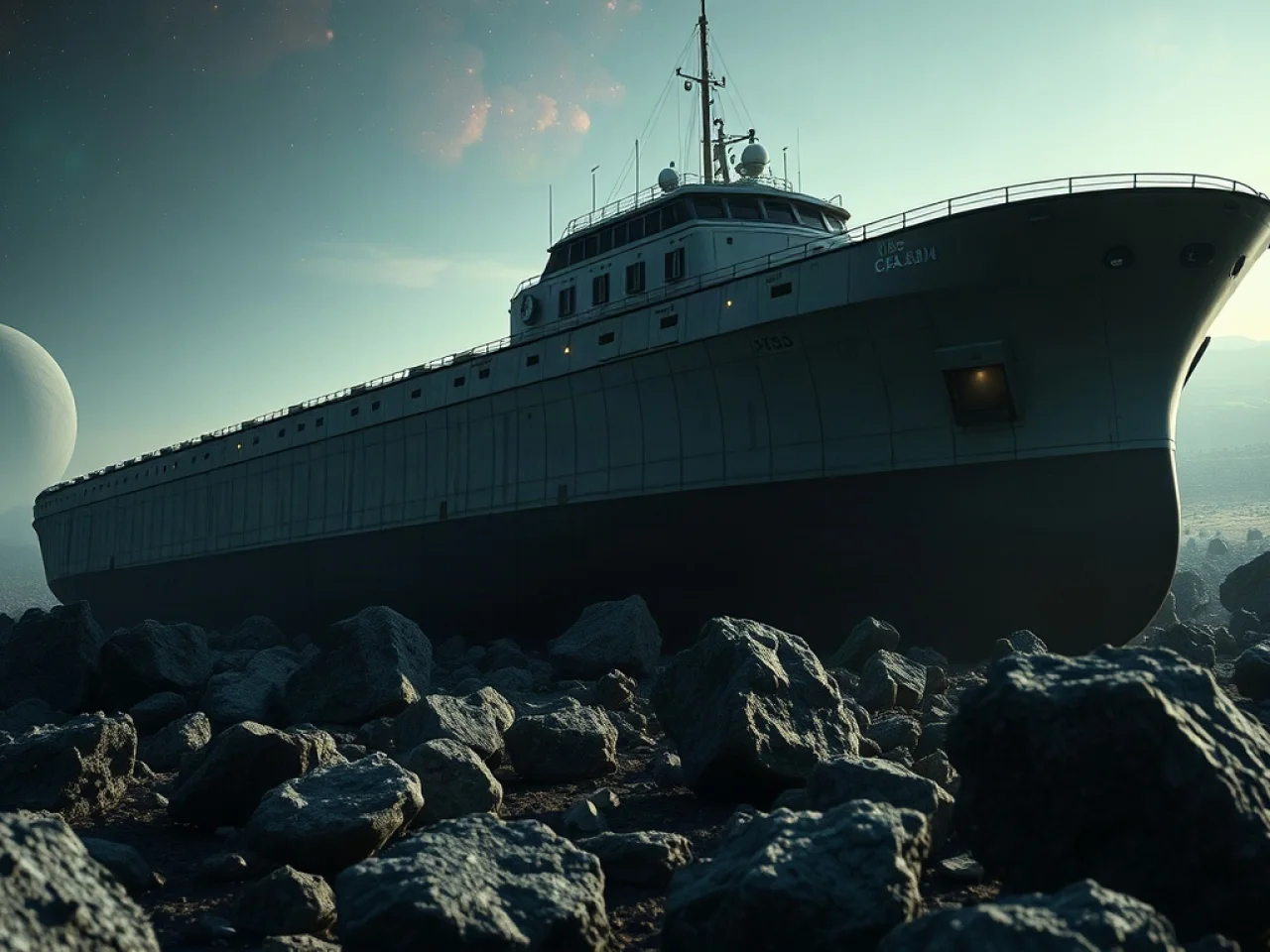
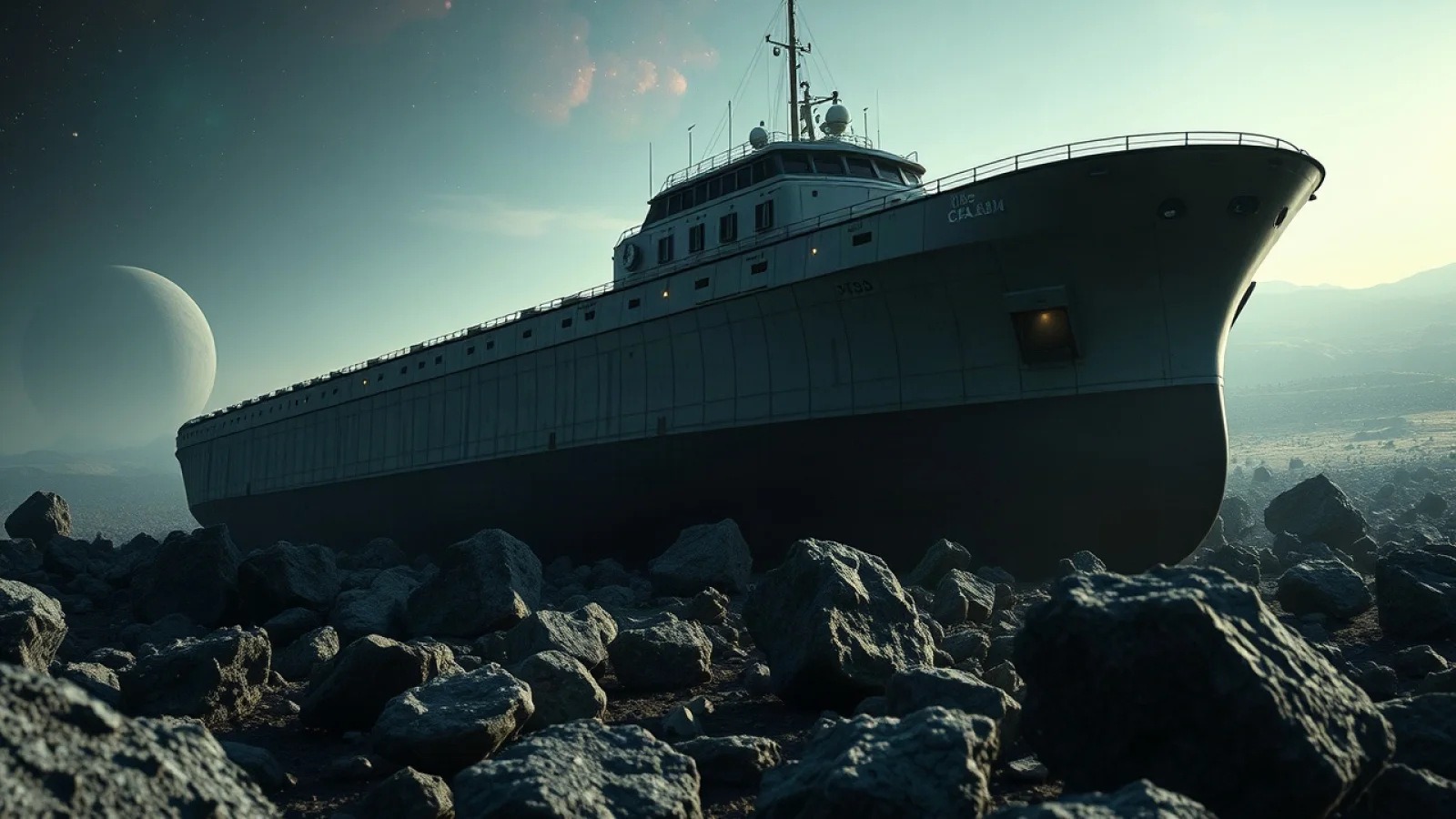
📷 FIELD PHOTO: The 'Ironclad', a standard Anti-Grav Freight Skiff, exemplifies Vesper Ring's industrial might, hauling massive ore payloads through perilous asteroid belts.
The Iron Whale of the Belt
Chapter 1 NarrationThe Iron Whale of the Belt
Calling the 'Ironclad' a skiff is a misnomer; this vessel is a continent of metal, designed for one purpose: hauling raw asteroid ore from the resource-rich Outer Belt to the processing hubs nearer Vesper's core. Its deck, a vast expanse stretching three hundred feet, is a latticework of heavy-duty plating designed to withstand micrometeoroid impacts and the constant stress of its cargo. When fully loaded, it carries upwards of twenty thousand tons of raw geological samples, enough to fuel a small city's foundries for a cycle. The sheer scale is humbling. Standing at the helm, encased in a specialized control bubble that offers panoramic views, you feel like a pilot navigating a titan. The air inside carries the faint, metallic tang of ozone and recycled coolant, a persistent scent that becomes strangely comforting during long hauls. This isn't about speed; it's about brute force, resilience, and an unwavering adherence to course. The engines, a series of modular gravimetric emitters mounted along the ventral hull, hum with contained energy, the lifeblood of its unique propulsion system. This leviathan moves not with thrust, but with calculated nudges against the very fabric of spacetime. Its presence here, threading through a dense field of tumbling rock and ice, is a testament to Vesper's relentless drive for resources.
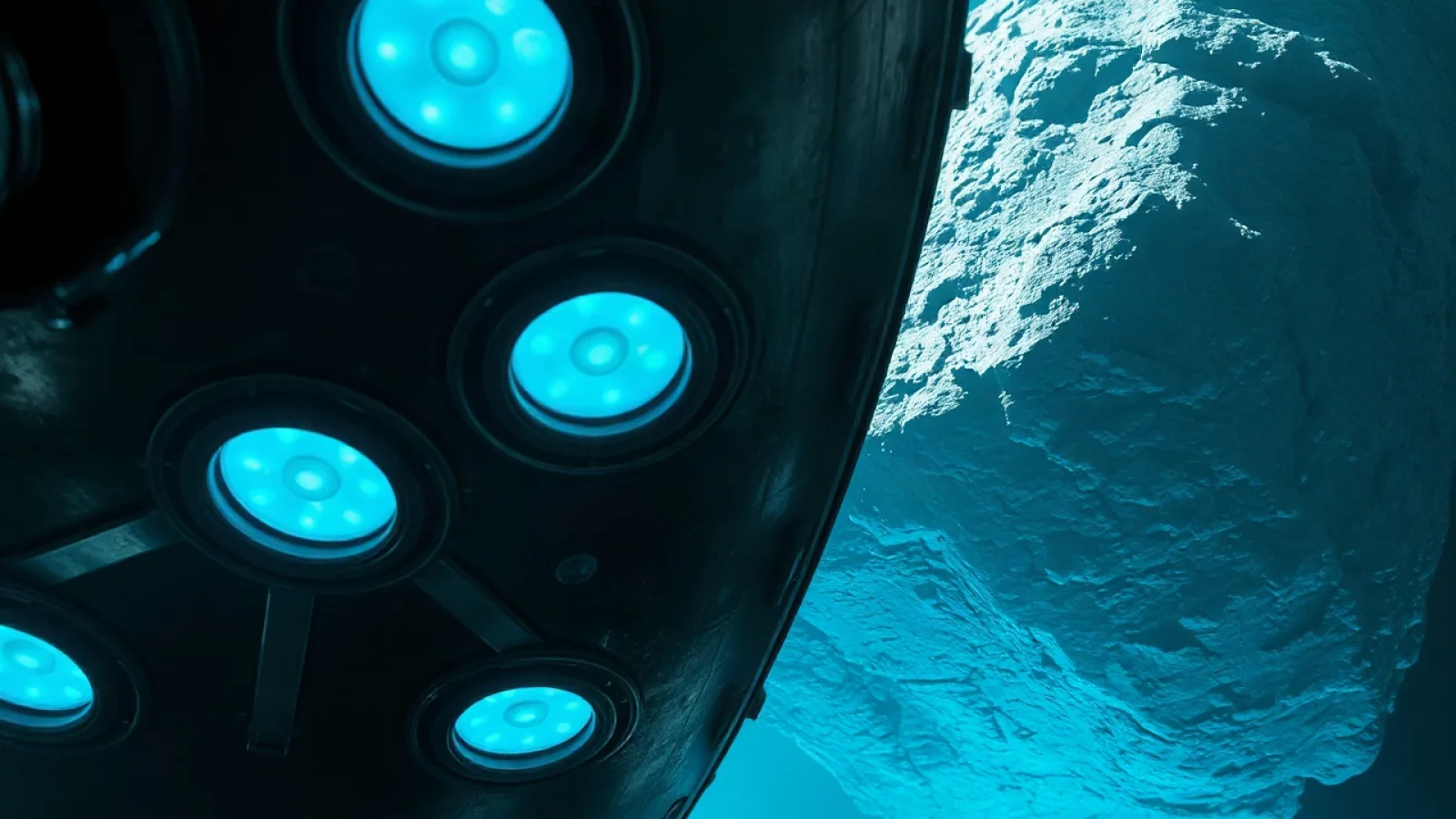
📷 FIELD PHOTO: The heart of the skiff's propulsion: Gravimetric Repulsor Array emitters, which generate localized fields to navigate dense asteroid fields.
Grav-Pulse Navigation: Dancing with Debris
Chapter 2 NarrationGrav-Pulse Navigation: Dancing with Debris
The real magic of the Ironclad, and indeed all Vesper freight skiffs, lies in their gravimetric propulsion. Forget rockets and ion drives; these ships 'push' themselves through space using carefully calibrated gravitational repulsion pulses. The core of this system is the Gravimetric Repulsor Array (GRA) located beneath the main cargo deck. These aren't simple magnets; they generate localized, directional fields that interact with the mass of nearby celestial bodies – in this case, the asteroids. Think of it like this: the skiff emits a pulse that momentarily makes the asteroid in its path 'lighter' to the skiff's field, while simultaneously creating a stronger repulsive force on the opposite side. By rapidly firing these pulses, the skiff can 'walk' or 'push' its way through the field, nudging aside or carefully maneuvering around obstacles. It's a slow, deliberate process, requiring constant micro-adjustments from the navigation AI, guided by an array of gravimetric sensors that map the field in real-time. The sensation during a pulse is subtle but distinct – a momentary shift in inertia, a gentle 'lean' as the ship reorients itself. When approaching a particularly large asteroid, the system fires a sustained, powerful pulse, creating a visible distortion in the space around the obstacle as it's gently nudged off course, allowing the skiff to glide past. This dance is mesmerising to watch, a ballet of physics conducted on a colossal scale, ensuring the precious cargo reaches its destination intact.
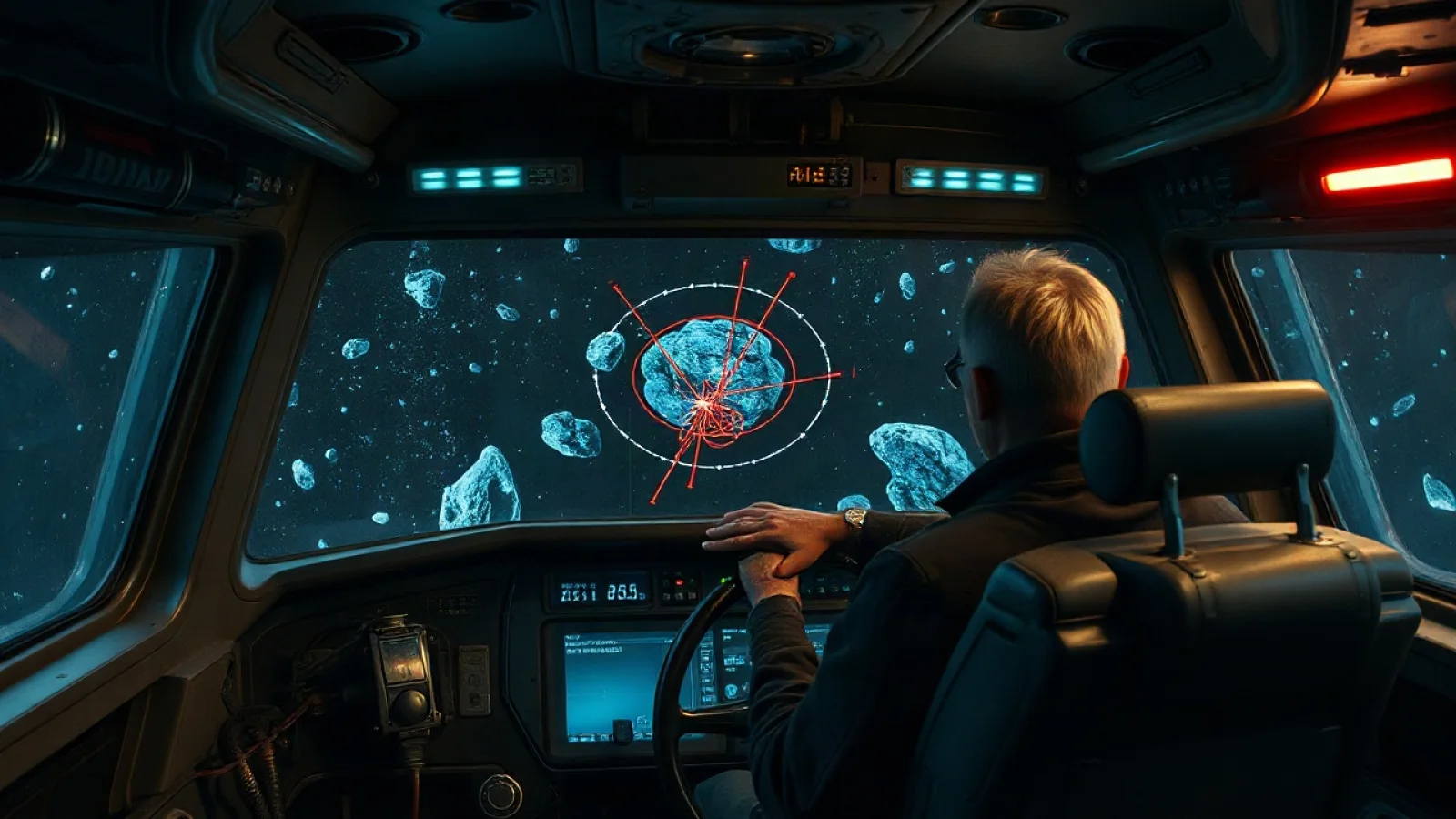
📷 FIELD PHOTO: The functional helm of the 'Ironclad' prioritizes sensor data and tactile controls, reflecting the ship's demanding operational environment.
The Sensory Experience: Inside the Helm
Chapter 3 NarrationThe Sensory Experience: Inside the Helm
Riding shotgun in the helm is an education in controlled tension. The cockpit isn't sleek and minimalist; it's functional, almost industrial, with worn grips on the manual override levers and a faint, persistent hum from the life support. The primary display is a holographic projection of the immediate asteroid field, rendered in real-time from gravimetric and visual scans. It’s a constantly shifting tapestry of red indicators for imminent collisions, blue lines for calculated trajectories, and amber data streams detailing asteroid composition and mass. The air filtration system works overtime, scrubbing out the fine dust that inevitably seeps in, leaving a faint scent of ionized metal. The sounds are a symphony of the industrial: the rhythmic *thump-thump* of the grav-pulses, the high-pitched whine of the sensor arrays, the occasional sharp *clank* as the skiff adjusts its position against a particularly stubborn chunk of debris. Our pilot, a grizzled veteran named Anya, rarely speaks, her focus entirely on the shifting holographic field and the tactile feedback from her console. She communicates in short bursts, confirming trajectory adjustments or issuing warnings about unexpected mass fluctuations. There’s a palpable sense of trust here, not just in Anya, but in the ship’s AI and the underlying physics that govern its movement. It’s a stark contrast to the graceful glide of atmospheric craft; this is deliberate, powerful, and utterly essential work.
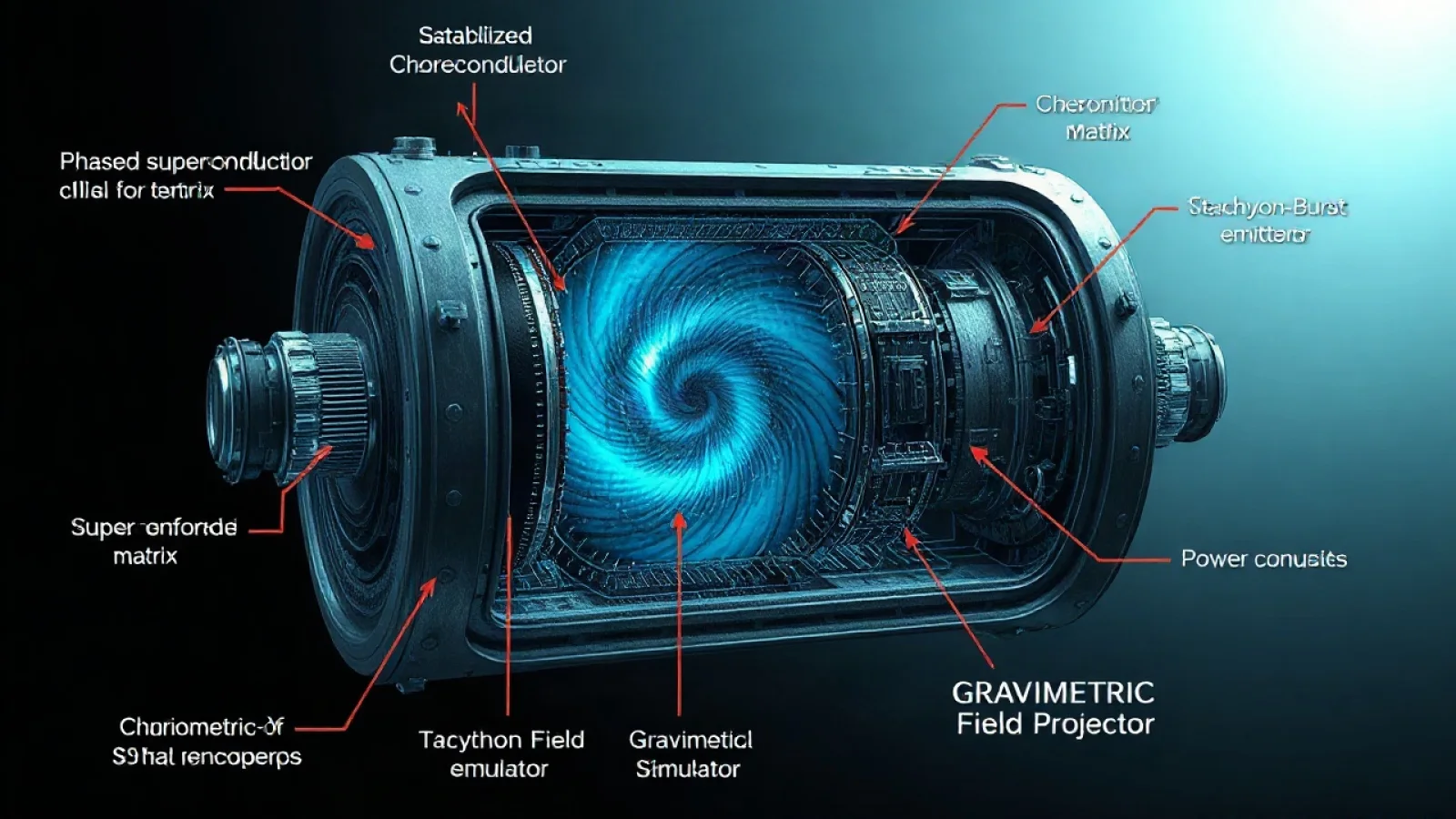
📷 FIELD PHOTO: Technical schematic of the GRA Mk. IV emitter, detailing the complex interplay of superconductors, exotic particles, and energy bursts that enable gravitational manipulation.
Technical Dossier: Gravimetric Repulsor Array (GRA) Mk. IV
Chapter 4 NarrationTechnical Dossier: Gravimetric Repulsor Array (GRA) Mk. IV
The Gravimetric Repulsor Array (GRA) is the proprietary technology that makes these hauls possible. The Mk. IV iteration, standard on most Vesper Ring haulers, utilizes a phased superconductor matrix to generate highly localized, directional gravitational fields. Each emitter module contains a core of stabilized Chroniton-X particles, suspended within a magnetic containment field. When activated, these particles are stimulated by precisely timed tachyon bursts, causing them to resonate and momentarily warp the local gravitational constant. The effect is not true anti-gravity, but a precise manipulation of gravitational interaction. The skiff 'projects' a field that repels specific masses, effectively pushing itself away from them. The energy input is substantial; each pulse draws heavily from the ship's primary fusion core, requiring careful power management. The Mk. IV boasts a significant improvement in pulse efficiency over its predecessors, allowing for more frequent and subtle course corrections. Sensor integration is paramount: a network of gravimetric 'eyes' constantly scans the environment, feeding data to the flight computer which calculates the optimal sequence and intensity of pulses. Fail-safes are robust, with redundant power conduits and an emergency inertia dampener, though a complete GRA failure in a dense field would be catastrophic. Maintenance involves regular recalibration of the Chroniton-X resonance frequencies and inspection of the superconductor matrix for micro-fractures.
Energy InputHigh-draw, pulsed energy from primary fusion core.
Control SystemAI-driven flight computer with real-time gravimetric sensor input.
Repulsion ForceVariable, calibrated against target mass and distance.
Efficiency RatingMk. IV: 15% improvement over Mk. III.
Safety SystemsRedundant power, emergency inertia dampeners, field integrity monitors.
⚡ Operating Instructions
1
The GRA operates by momentarily altering the gravitational constant in a localized zone, creating a repulsive force relative to the skiff's own mass and the target mass.
2
Precise calibration is crucial; miscalculations can lead to uncontrolled acceleration or collision.
3
Continuous monitoring of Chroniton-X particle stability is required to prevent field collapse.
💡 Explorer's Tip: Always trust the AI's trajectory calculations in dense fields, but keep manual overrides accessible. Unexpected gravitational anomalies are rare but can override programmed responses.
JOURNAL SUMMARY
The Explorer's Verdict
9.2/10DISCOVERY SCORE
The Anti-Grav Freight Skiff is a marvel of engineering, showcasing Vesper Ring's mastery over fundamental forces for practical, large-scale transport. Its ability to navigate hazardous asteroid fields with such precision and brute force is astounding. While not built for speed, its sheer resilience and unique propulsion method make it an indispensable workhorse of the sector.
Highlights:
✓ Unparalleled asteroid field navigation capabilities.
✓ Robust and resilient design for harsh environments.
✓ Ingenious application of gravimetric manipulation.
Things to Note:
⚠ Extremely slow transit times.
⚠ High energy consumption during pulse generation.
⚠ Catastrophic failure potential in case of core system malfunction.