The Limestone Leviathan: A Pre-CataclysmStarship Entombed
A monumental discovery in Aetheria's Limestone Under-Shelf: a colossal, fossilized starship predating warp drives, now a vibrant, living coral reef structure. Its intricate systems hint at forgotten technologies.
With a keen eye for the arcane and a knack for deciphering the indecipherable, Taro Vance navigates the myriad wonders of the BrainPandora multiverse, documenting its most profound mysteries.
🎙
Audio Edition · Narrated Field Report
Voice journal reading by Taro Vance
The descent into Aetheria's Limestone Under-Shelf is always a sensory symphony. Bioluminescent plankton drift like fallen stars in the perpetual twilight, their gentle pulses illuminating the slow, inexorable growth of the living reef. The water here carries the faint, mineral tang of calcium carbonate and the subtle, sweet perfume of aether-bloom, a scent unique to these depths. But today, the usual quiet hum of organic accretion was amplified by a different kind of resonance – the deep, almost imperceptible thrum of something immense, something ancient, awakening beneath the coral's embrace.
Vessel LengthApproximately 2 miles
Encasing OrganismLiving Limestone Coral
Estimated AgePre-Cataclysm Era
Primary DiscoveryExtinct Stellar Navigation System
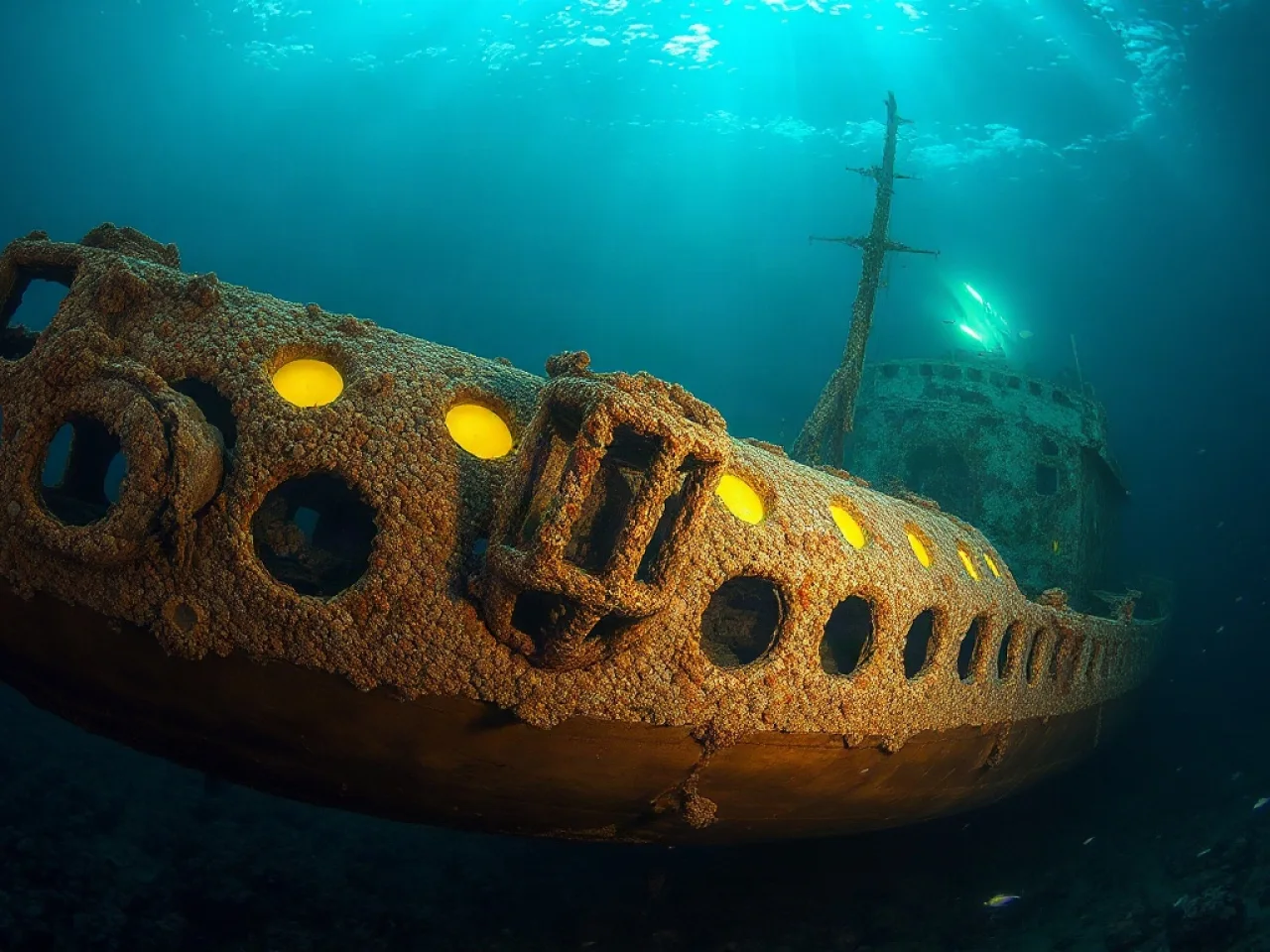
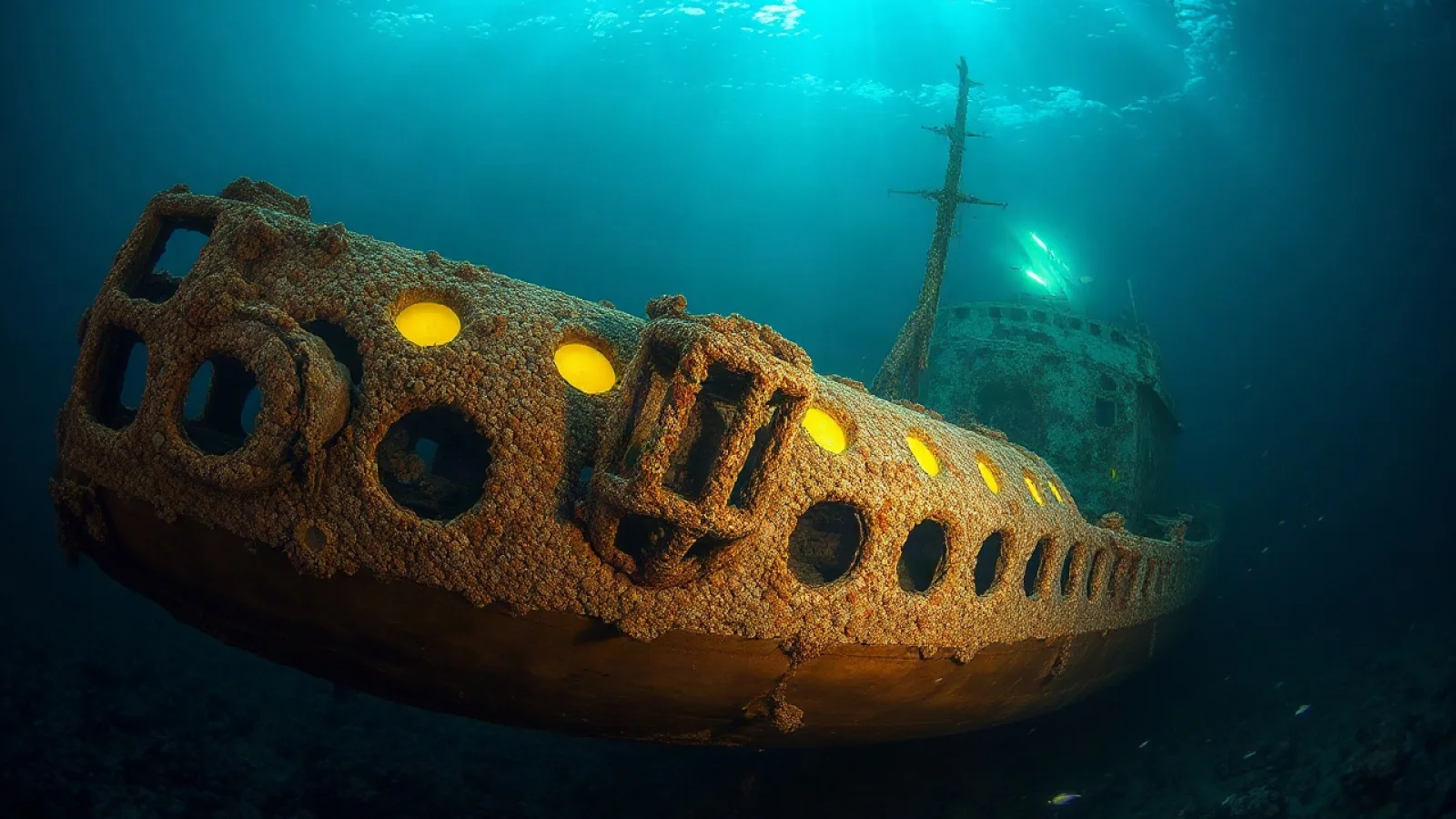
📷 FIELD PHOTO: The 'Limestone Leviathan,' a Pre-Cataclysm starship, now a thriving ecosystem within Aetheria's Limestone Under-Shelf.
The Coral Bloom's Embrace
Chapter 1 NarrationThe Coral Bloom's Embrace
We first detected the anomaly as a peculiar density signature on the sonic scans, far larger than any known geological formation. As our submersible, the 'Chrono-Drifter,' approached, the sheer scale became apparent. A leviathan of metal, utterly consumed by a vibrant, living coral. Not fossilized in inert rock, but integrated into a dynamic, biological entity. The coral here is unlike anything cataloged on the surface; it possesses a unique calcification process that allows it to 'grow' around and even into metallic structures, forming intricate, crystalline matrices. Luminescent algae bloom across its hull, casting an ethereal glow that dances with the shifting currents. The sheer weight of the limestone suggests immense pressure over millennia, yet the structure beneath remains eerily intact, a testament to Pre-Cataclysm engineering that even living geology struggles to erode. The scent of ozone, mingled with the sea-salt and coral, is potent, hinting at residual energies.
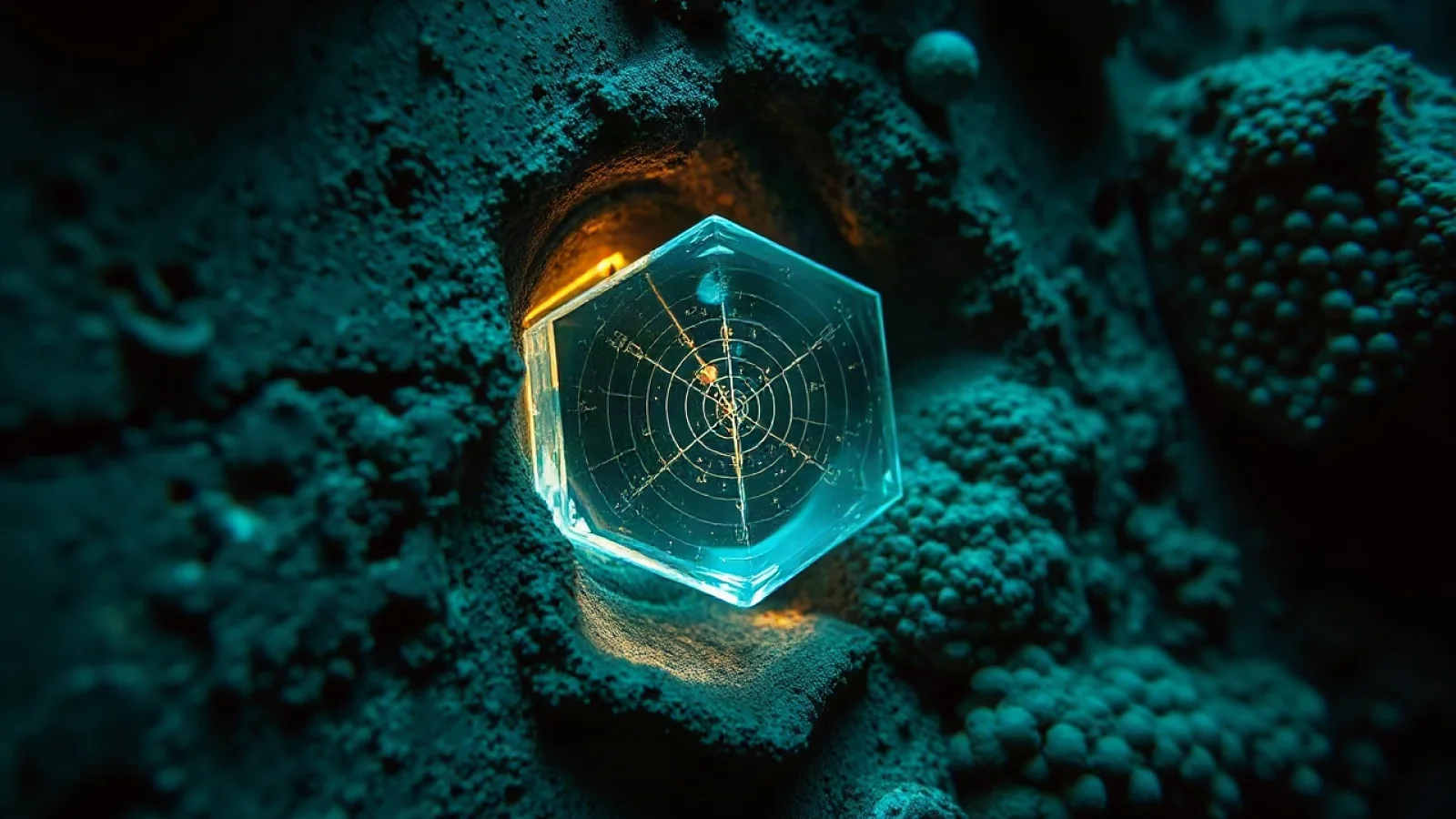
📷 FIELD PHOTO: A salvaged memory-crystal, hinting at the starship's sophisticated gravimetric stellar mapping capabilities.
Whispers of the Stellar Cartographers
Chapter 2 NarrationWhispers of the Stellar Cartographers
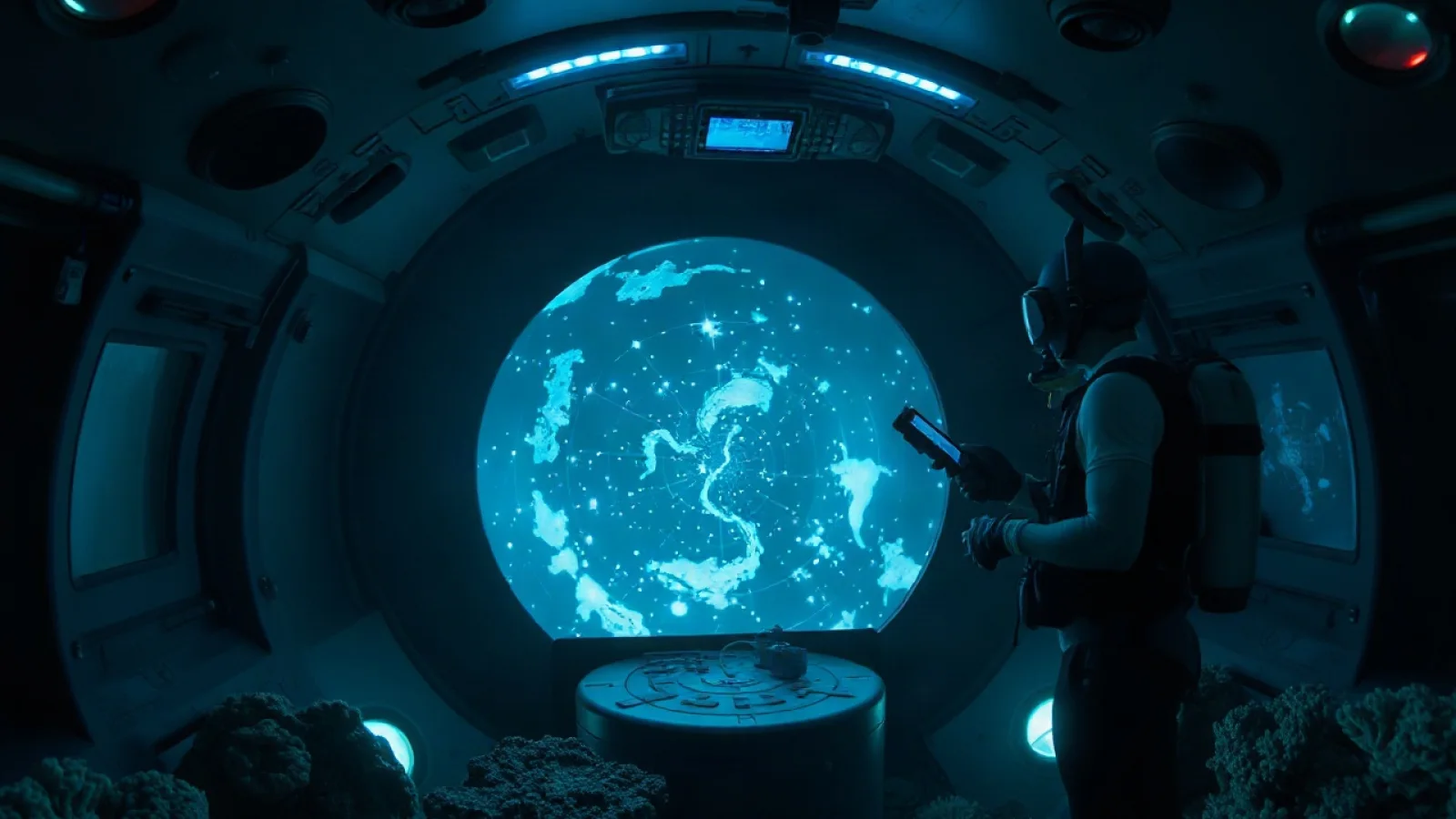
Our initial breach point, a surprisingly intact auxiliary airlock now choked with calcified growths, led us into the ship's primary navigation chamber. The most striking discovery wasn't the ship's propulsion system – that’s likely entombed deep within the denser strata – but its stellar cartography array. This isn't a simple star map; it’s a kinetic, three-dimensional projection system that utilized gravimetric resonance to map celestial bodies. We found what appear to be 'memory-crystals,' hexagonal silicate structures that, when stimulated with precise sonic frequencies, project faint, ghostly echoes of star charts and navigational vectors. It’s a far cry from our modern warp-field navigators, relying on brute force energy manipulation. This system seems to have 'listened' to the cosmos, deciphering gravitational tides and stellar drift. The sheer elegance of it, so alien and yet so logical, is breathtaking. We managed to extract a small, intact crystal, humming with residual gravimetric potential, which we'll analyze back at the lab.
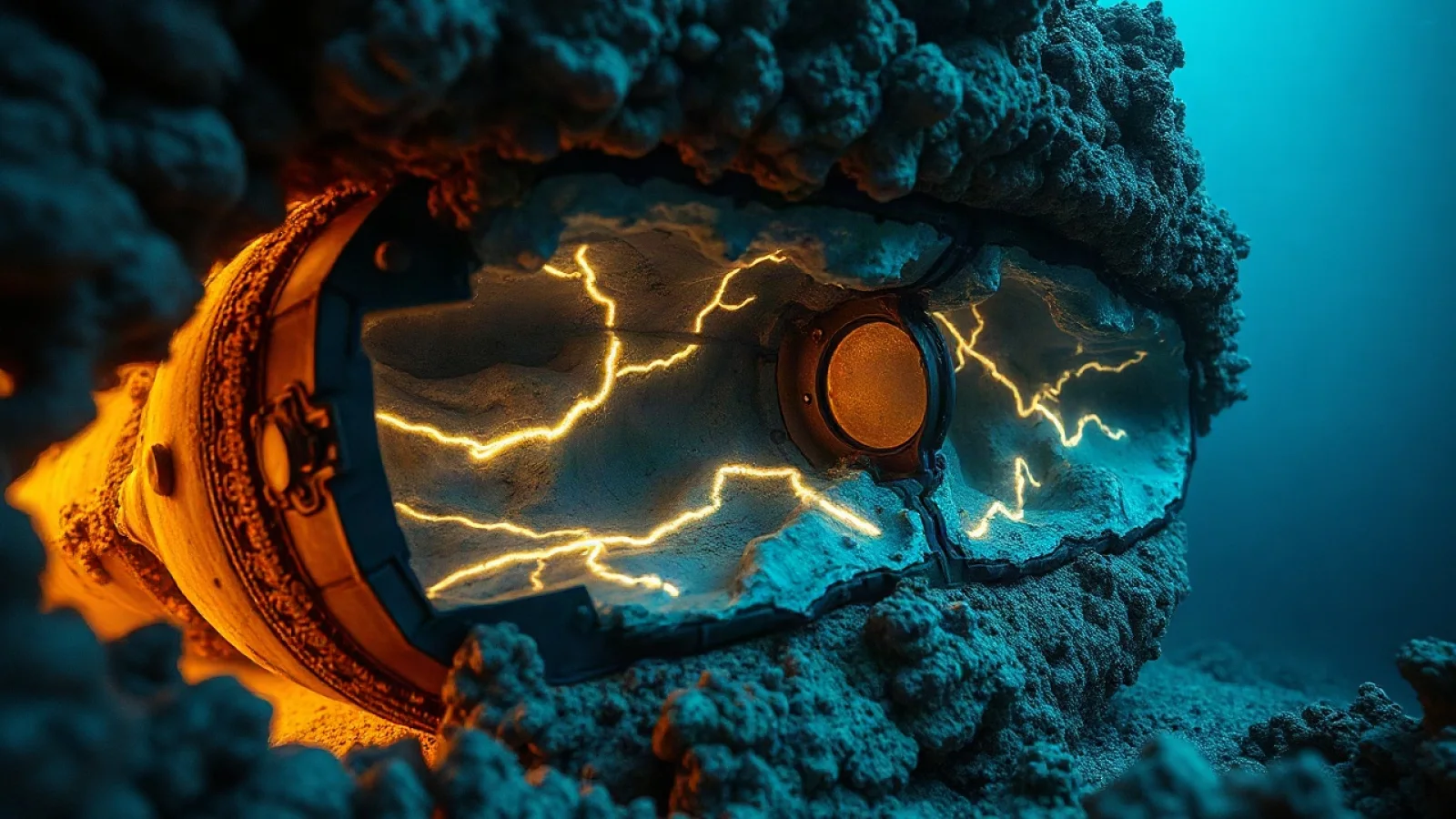
📷 FIELD PHOTO: The starship's hull is integrated with living coral via pulsing vascular channels, a testament to advanced bio-engineering.
The Bio-Integration Mechanism
Chapter 3 NarrationThe Bio-Integration Mechanism
The most perplexing aspect is the ship's integration with the living limestone. Our xenobotanists theorize that the ship's original hull materials, likely a complex alloy designed for extreme longevity, reacted with a specific mineral substrate found only in this stratum of Aetheria. This reaction catalyzed an accelerated growth in the native limestone coral polyps, which then began to excrete a unique, self-repairing bio-limestone. It’s not just encapsulation; it’s a symbiotic integration. We observed pulsating vascular channels within the coral, lined with a shimmering, opalescent membrane, that appear to carry nutrients and possibly even residual energy from the ship's dormant systems to the coral. This suggests a deliberate bio-integration system, perhaps a last-ditch effort to preserve the vessel or even to create a living tomb that could sustain itself indefinitely. The coral actively 'heals' minor breaches, and we've even seen evidence of the polyps re-routing their growth patterns to reinforce stressed sections of the hull. It’s a slow, silent testament to an advanced understanding of bio-engineering.
📷 FIELD PHOTO: The navigation chamber, where echoes of a forgotten, resonance-based stellar travel paradigm are being deciphered.
Echoes of a Lost Navigation Paradigm
Chapter 4 NarrationEchoes of a Lost Navigation Paradigm
The 'Stellar Cartographers,' as I've tentatively dubbed them, operated on principles we're only beginning to grasp. The gravimetric resonance system, unlike our current warp-drive physics which manipulates spacetime curvature, seems to have 'tuned' into the natural gravitational frequencies of stellar bodies. Imagine using the universe's own hum to plot a course. The memory-crystals likely store complex wave patterns, not static data. When activated, they vibrate at specific resonant frequencies, interacting with the ship's internal gravimetric field generators – themselves a marvel of miniaturization for their era – to create a tangible, 3D representation of the local stellar neighborhood. This suggests a philosophy of travel that was less about forceful propulsion and more about understanding and harmonizing with cosmic forces. It's a paradigm shift, moving from 'pushing' through space to 'flowing' with it. The implications for future exploration are staggering, potentially opening up pathways previously thought impossible, or at least unimaginably energy-intensive.
Bio-Limestone MatrixSymbiotic coral structure, provides long-term vessel integrity and potential energy transfer.
⚠️ Field Safety Protocols
1
1. Identify celestial body signature: Match observed gravimetric fluctuations to stored resonant patterns within a memory-crystal.
2
2. Calibrate resonance emitters: Tune internal generators to match the target body's primary gravitational frequency.
3
3. Initiate harmonizing current: Generate a subtle gravimetric current, allowing the ship to 'drift' along the established resonant pathway.
4
4. Monitor bio-integration: Ensure nutrient and energy flow between hull and coral matrix remains optimal for extended journeys.
💡 Explorer's Tip: Avoid direct manipulation of gravimetric fields; the Pre-Cataclysm approach was about attunement, not brute force. Think of it as learning to surf the cosmic waves, not fighting the tide.
JOURNAL SUMMARY
The Explorer's Verdict
9.7/10DISCOVERY SCORE
The Limestone Leviathan is an unparalleled discovery, offering a breathtaking glimpse into a civilization that navigated the cosmos through harmony rather than force. Its unique bio-integrated structure and gravimetric navigation system rewrite our understanding of Pre-Cataclysm capabilities, though the full extent of its operational principles remains a tantalizing mystery. A triumph of archaeological preservation and a beacon for future exploration.
Highlights:
✓ Revolutionary navigation paradigm discovered.
✓ Exceptional state of preservation via bio-integration.
✓ Unique living ecosystem formed around the relic.
Things to Note:
⚠ Extreme depth and pressure require specialized equipment.
⚠ Unknown residual energies within the vessel.
⚠ Fragile bio-limestone requires delicate handling.