AI in Medical Diagnostics and Imaging: A Revolution in Healthcare
The Dawn of a New Era
Artificial intelligence (AI) is rapidly transforming numerous sectors, and healthcare is no exception. Within medical diagnostics and imaging, AI is proving to be a game-changer, promising earlier detection, more accurate diagnoses, and improved patient outcomes.
How AI is Enhancing Diagnostics
Traditionally, medical diagnoses relied heavily on the expertise of human practitioners. While invaluable, human interpretation can be subject to fatigue, subtle pattern recognition limitations, and the sheer volume of data. AI algorithms, particularly those leveraging deep learning and machine learning, can analyze vast datasets of medical images and patient records with incredible speed and precision. This allows them to identify anomalies that might be imperceptible to the human eye, leading to earlier and more precise identification of diseases.
Radiology's AI Ally
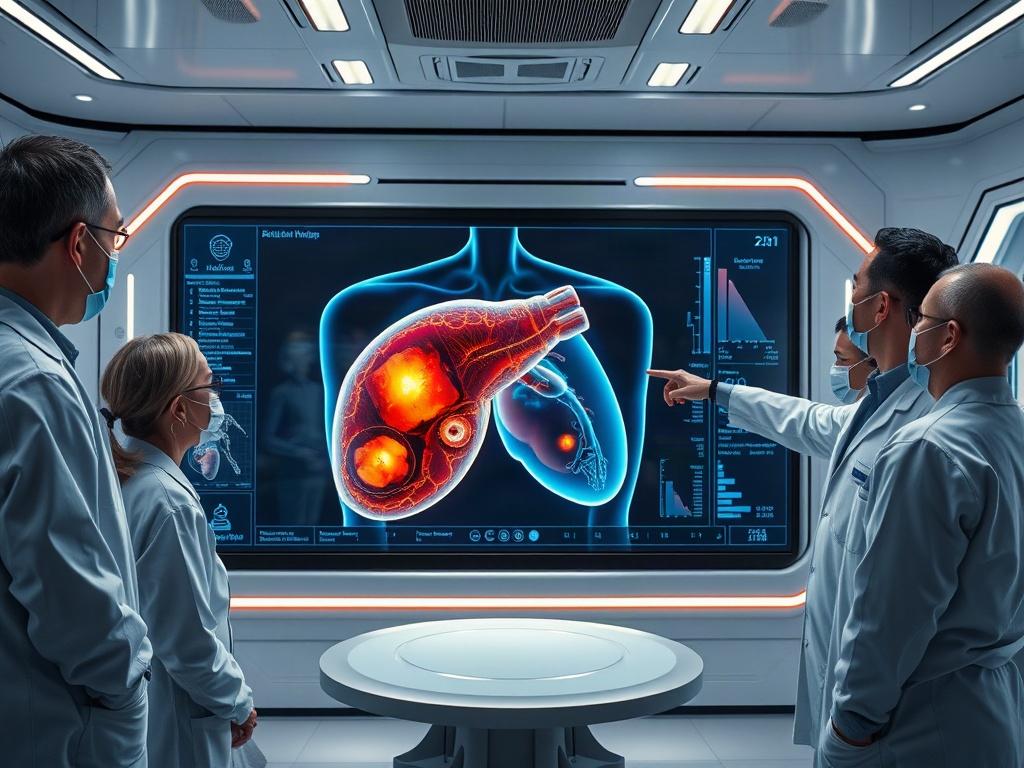
Radiology, the field that interprets medical images like X-rays, CT scans, and MRIs, is at the forefront of AI adoption. AI algorithms are being trained to detect specific abnormalities, such as cancerous tumors in mammograms, subtle signs of diabetic retinopathy in retinal scans, or early indicators of stroke in brain imaging. This not only speeds up the diagnostic process but also helps radiologists prioritize critical cases, ensuring patients receive timely treatment.
Pathology's Digital Assistant
Beyond imaging, AI is also making significant strides in pathology. Analyzing tissue samples under a microscope is a meticulous process. AI can assist pathologists by automatically identifying and quantifying abnormal cells, classifying tumor types, and even predicting treatment response based on cellular patterns. This can lead to more consistent and objective diagnoses, reducing inter-observer variability.
Predictive Power and Personalized Medicine
The capabilities of AI extend beyond mere identification. By analyzing complex patterns in imaging data alongside genomic information and patient history, AI can help predict disease progression and individual patient responses to different treatments. This lays the groundwork for truly personalized medicine, where treatment plans are tailored to the unique biological makeup of each patient, maximizing efficacy and minimizing side effects.
Challenges and the Road Ahead
Despite its immense potential, the integration of AI into medical diagnostics is not without its challenges. Ethical considerations surrounding data privacy, algorithmic bias, and regulatory approvals are crucial. Furthermore, the need for robust validation and the seamless integration of AI tools into existing clinical workflows require careful planning and execution. The ongoing development and refinement of AI models, coupled with interdisciplinary collaboration between AI experts and medical professionals, will be key to unlocking its full potential.
The Future is Now
AI in medical diagnostics and imaging is not a distant future; it is a present reality that is continuously evolving. As AI technology matures and its applications become more sophisticated, we can anticipate a healthcare system that is more efficient, more accurate, and ultimately, more effective in improving human health.
Share This
Latest Blog

AI w Diagnostyce Medycznej i Obrazowaniu
15 Oct 2026
AI in Video Editing and Media Production
12 Oct 2026