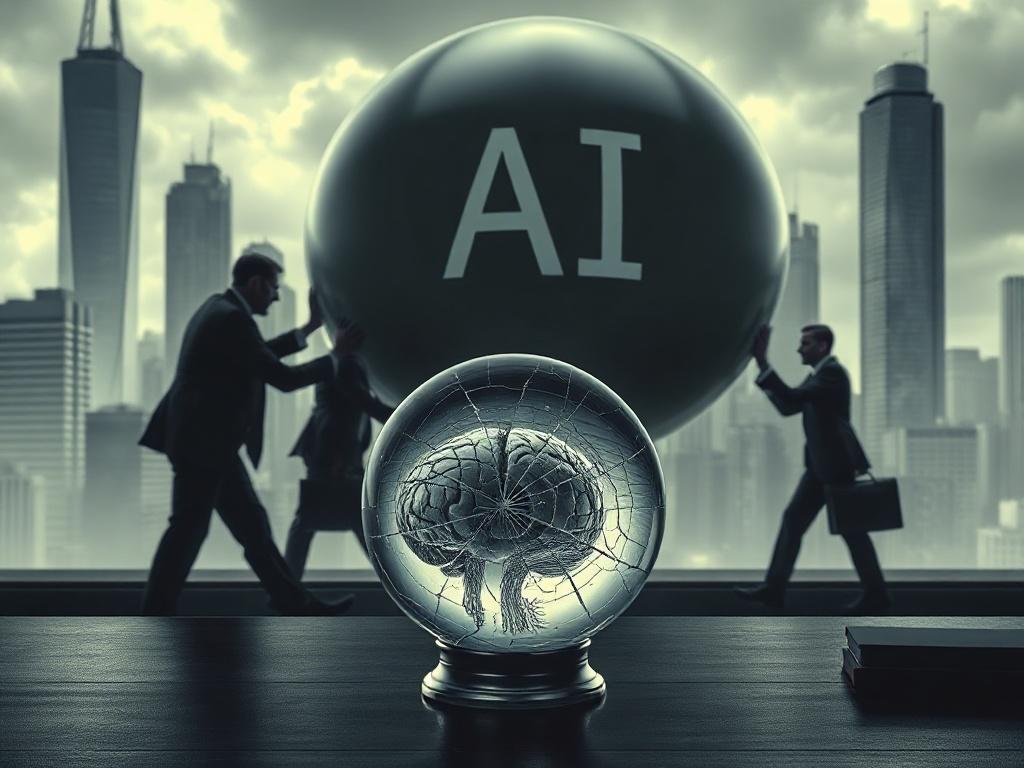
The AI Bubble: Dumb, Dangerous, and Demolishing Business
The Allure and the Abyss: Why the AI Bubble is a Business Nightmare
We're living in an era of unprecedented technological acceleration. Artificial intelligence, once the stuff of science fiction, is now a tangible force reshaping industries. Yet, beneath the glittering surface of innovation, a dangerous bubble is inflating, one that threatens to burst and leave businesses floundering in its wake. This isn't a cautionary tale about slow adoption; it's a stark warning about the reckless embrace of AI without a critical eye.
The Siren Song of "It Works": Blind Faith in the Algorithm
The current market is saturated with a fervent belief that "AI says it works," and therefore, it *must* work. Sales pitches are rife with hyperbolic claims, promising revolutionary breakthroughs driven by AI. Companies, eager not to be left behind, are rushing to implement AI solutions without fully understanding their limitations, their true costs, or the potential ramifications. This blind faith is the fuel for the AI bubble, and it's a recipe for disaster.
The Escalating Cost of Unchecked AI Adoption
Let's talk about money. The initial investment in AI technology, from software licenses to specialized hardware and the hiring of AI talent, is substantial. But the costs don't end there. Ongoing maintenance, data infrastructure, continuous training of models, and the inevitable need for human oversight to correct AI's errors all contribute to a rapidly escalating financial burden. Many businesses are sold on the promise of efficiency and cost savings, only to find themselves hemorrhaging funds on systems that underdeliver or require constant, expensive intervention.
The Responsibility Vacuum: When AI Fails, Who Pays?
One of the most insidious aspects of the AI bubble is the erosion of accountability. When an AI system makes a critical error – misdiagnosing a medical condition, causing a financial loss, or facilitating a security breach – who is responsible? The developer? The vendor selling the "solution"? The company that implemented it? The lines are incredibly blurred. This lack of clear responsibility creates a dangerous vacuum, where flawed systems can cause significant damage with no one readily stepping up to take ownership.
The Leaky Drains: Private Information, Data, and Keys at Risk
Perhaps the most alarming consequence of unchecked AI adoption is the profound risk to sensitive information. AI systems are data-hungry. To learn and to function, they require vast amounts of information, much of which can be proprietary, confidential, or even personally identifiable. The security of these systems is paramount, yet the rush to deploy often outpaces robust security protocols. We've already seen instances of AI models inadvertently leaking private customer data, internal company secrets, and even cryptographic keys. This isn't a hypothetical threat; it's a clear and present danger that can devastate a business's reputation and lead to severe legal repercussions.
The Tech's Echo Chamber: "AI Says It Works" as the Ultimate Authority
There's a dangerous feedback loop forming. Tech companies are selling AI solutions, and in turn, they trumpet the successes, often amplified by the "AI says it works" mantra. Businesses, influenced by this narrative and the fear of missing out (FOMO), are buying. This creates an echo chamber where critical evaluation is stifled, and the real-world performance and risks of AI are often downplayed or ignored. The sales teams are masters of their craft, painting an idyllic picture of AI-driven success, while the true costs and dangers remain hidden in the fine print, or worse, are simply not understood.
Navigating the Storm: A Call for Prudence and Critical Thinking
The AI revolution is inevitable and holds immense potential. However, succumbing to the current bubble mentality is a path fraught with peril. Businesses must move beyond the hype and demand transparency, accountability, and robust security measures. Before investing, ask the hard questions: What are the *real* costs? What happens when it fails? How is our data protected? Relying on "AI says it works" is no longer a viable strategy; it's a gamble with potentially catastrophic consequences for your business.
Share This
Latest Blog


AI w Diagnostyce Medycznej i Obrazowaniu
15 Oct 2026
AI in Video Editing and Media Production
12 Oct 2026